
Last updated November 21, 2026
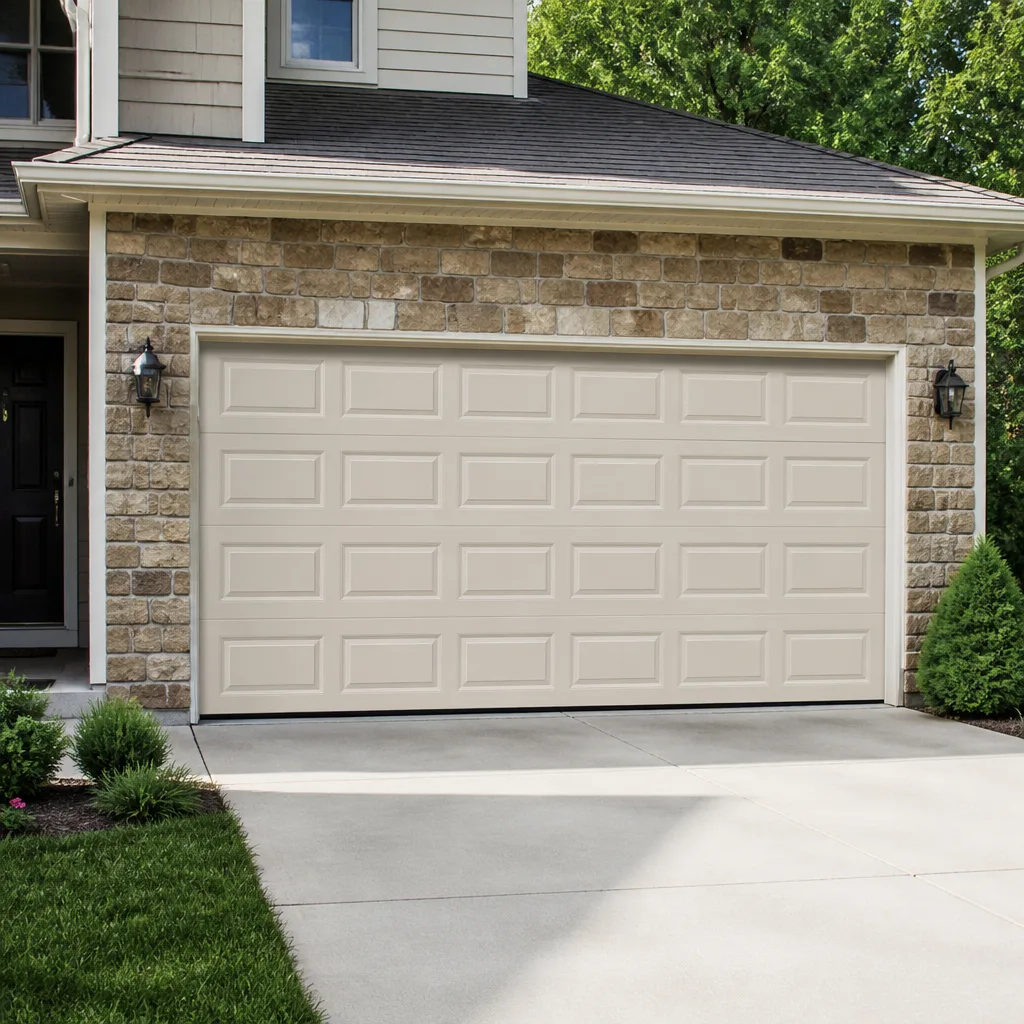 Raised-panel steel
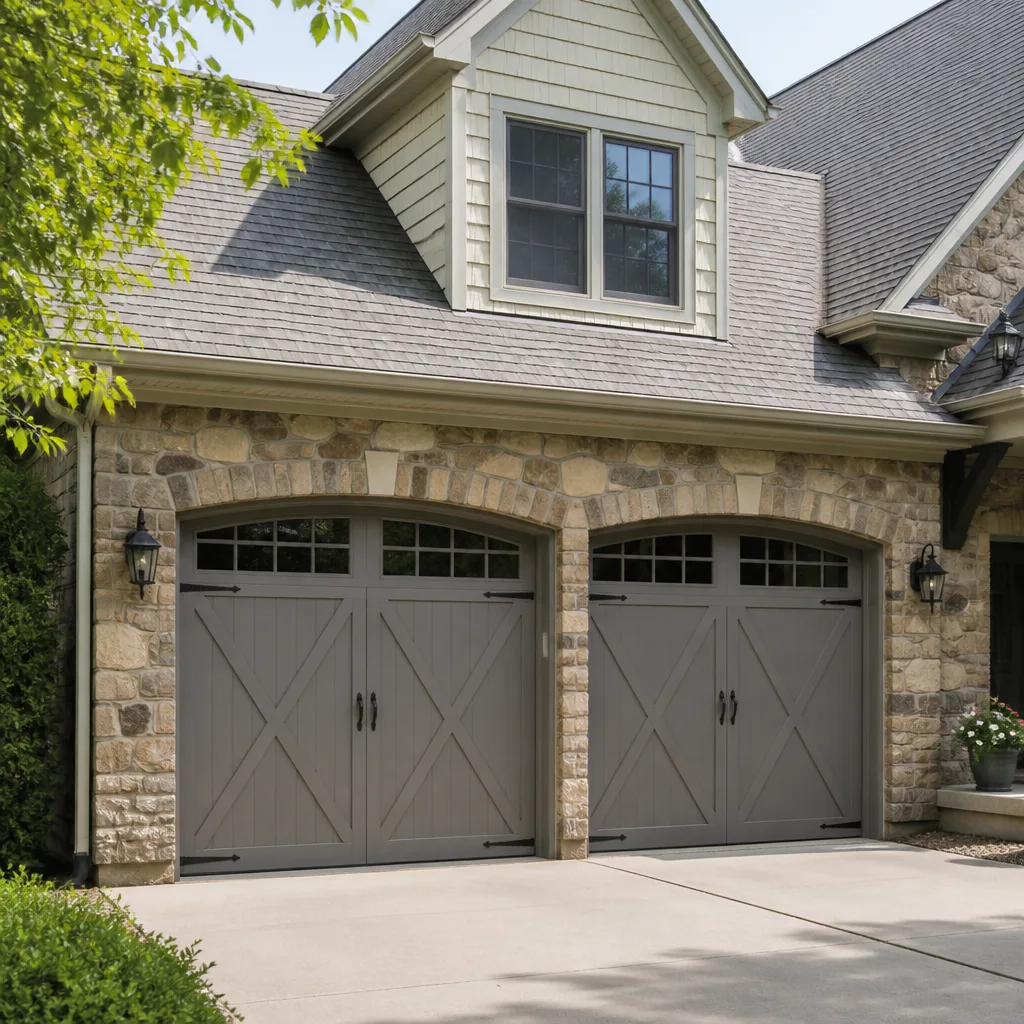 Carriage house
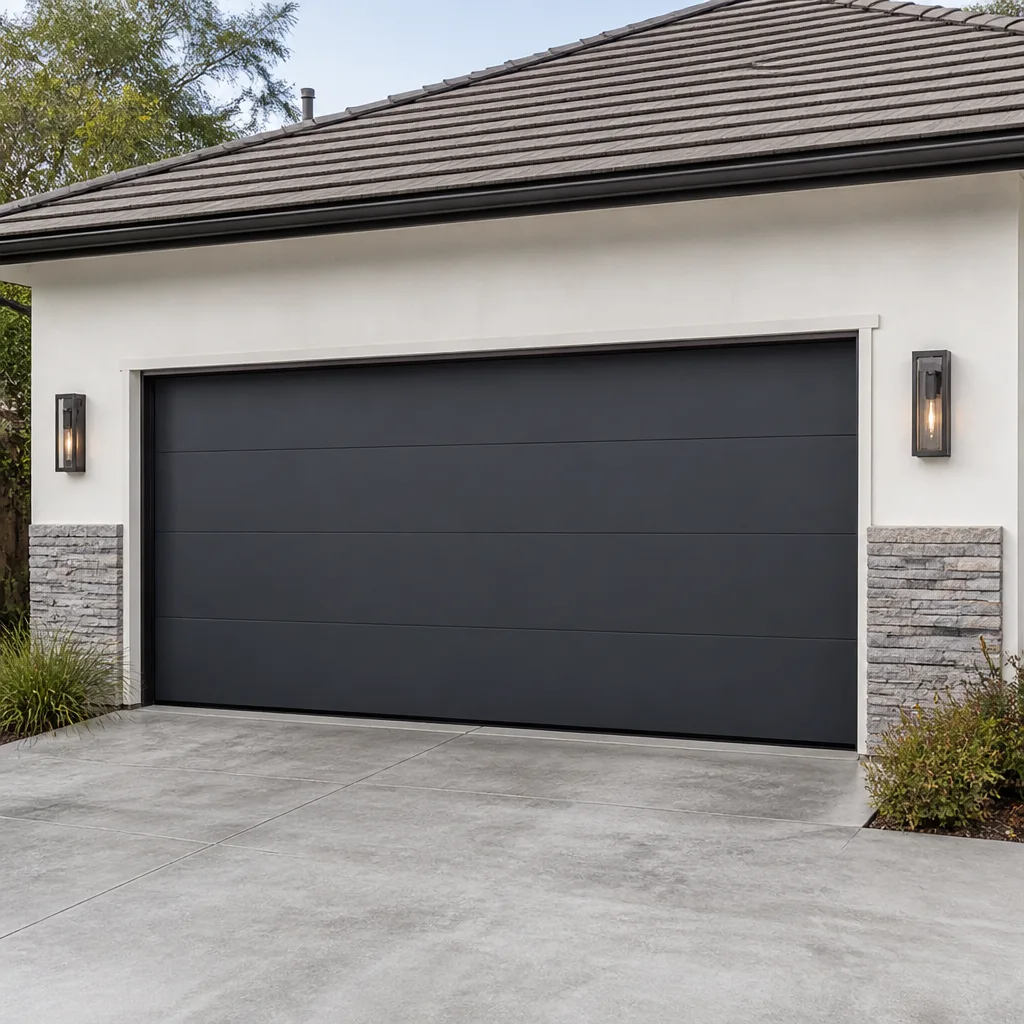 Modern flush
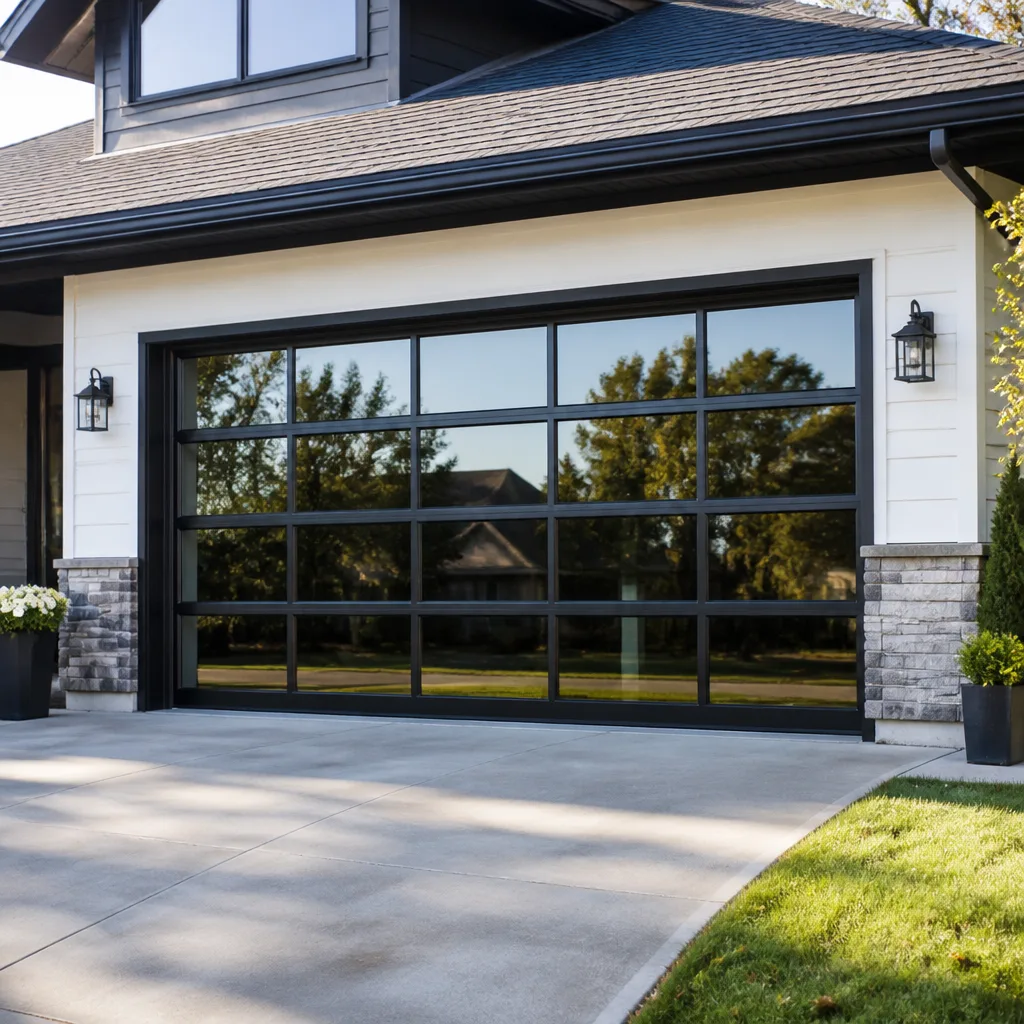 Full-view glass
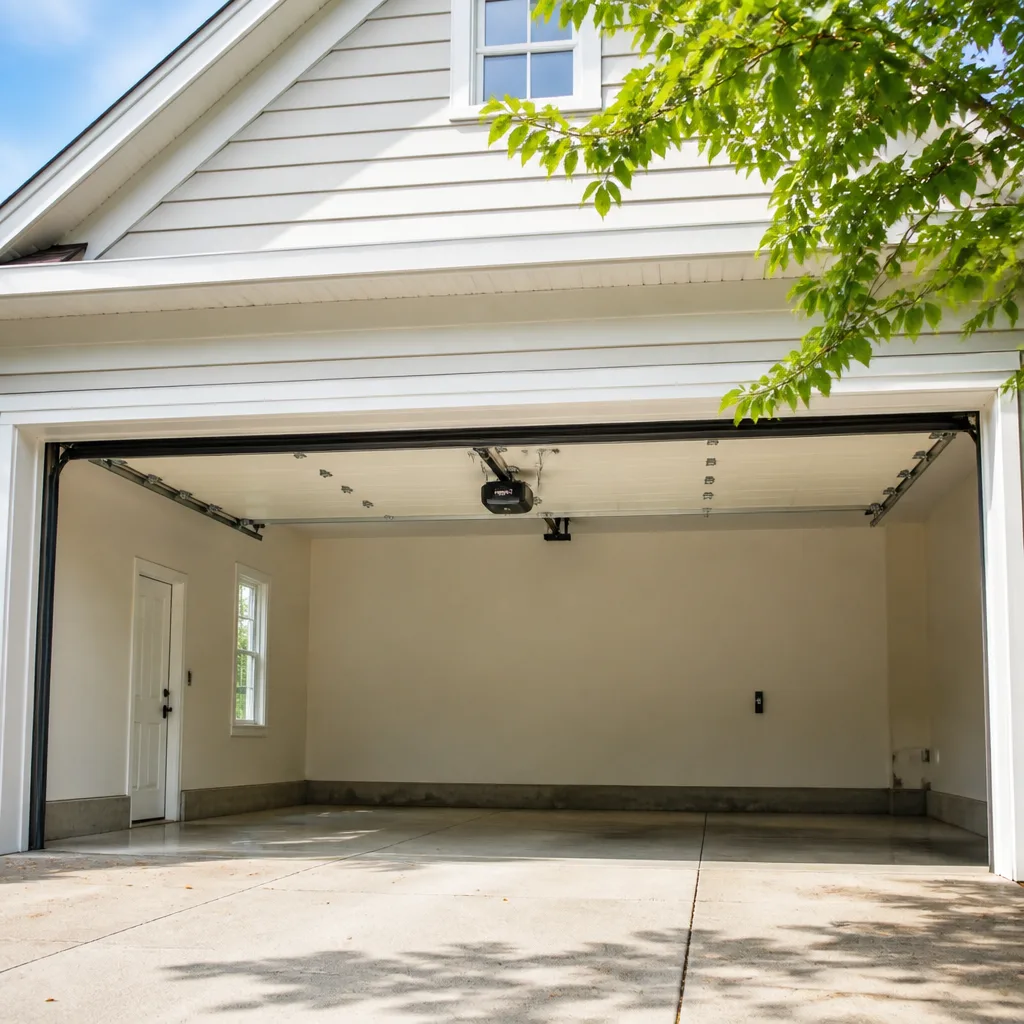 LiftMaster openers
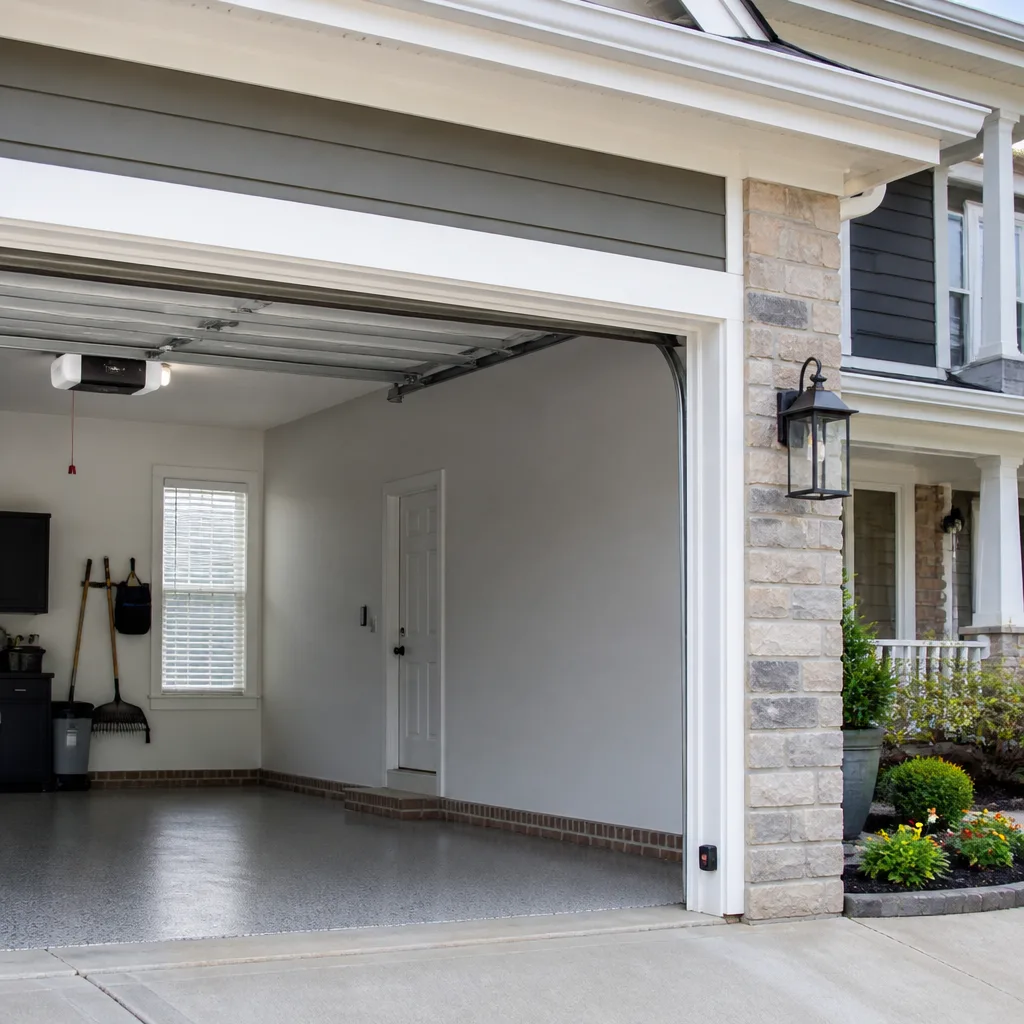 Chamberlain openers
Full 25-point door and opener safety check with every visit - springs, cables, rollers, tracks, and your LiftMaster or Chamberlain opener included
You get a price before we start. It does not change when the pro arrives.
Get your free estimateThe Complete Guide to Garage Doors in Daytona Beach
Most garage door guides are written for Phoenix or Denver. Follow that advice in Daytona Beach and you’ll spend money on the wrong fixes. Here, a door battles year-round humidity, intense sun, and the hard realities of hurricane season, and the parts that fail first are rarely the ones generic checklists mention. Springs, tracks, and bottom seals all age on a different clock in this climate. This guide treats your door as a coastal mechanical system, not just a home feature. We’ll walk through the local failure patterns, which materials actually hold up, how the permit picture works, and a 10-minute inspection you can run yourself.
Quick Answer
A garage door in Daytona Beach should be inspected at least once a year, with a dedicated check before June 1st, the start of hurricane season. Humidity and salt-laden air attack springs, tracks, and bottom seals faster here than inland, so coated or corrosion-resistant hardware matters more than brand hype. Repairs like springs and openers are usually a same-day fix; full replacement involves a measure, an order, and a scheduled install. Any replacement that changes the door’s structure or wind rating likely needs a permit, so confirm with the City of Daytona Beach building department first.
Styles & brands we work with
- Raised-panel steel
- Carriage house
- Modern flush
- Full-view glass
- LiftMaster openers
- Chamberlain openers
Table of Contents
- How Daytona Beach’s Climate Changes Garage Door Wear
- Which Door Materials Hold Up Beachside
- The Local Permit and Wind-Load Picture
- Brand Performance in Florida Heat and Humidity
- The 10-Minute Inspection Most Homeowners Skip
- Repair or Replace? A Decision Framework
- Openers, Springs, and Panels: The Whole System
- Common Mistakes to Avoid
How Daytona Beach’s Climate Changes Garage Door Wear
Warm, humid air does more to a garage door than most homeowners realize. It works on metal slowly, season after season, and the parts that carry the most stress show it first. If you’re following a guide written for a dry climate, you’re likely checking the wrong things.
Here’s what actually wears faster in Daytona Beach:
- Springs sit under constant tension, and cycles fatigue them regardless of climate. But humidity accelerates surface corrosion on the coils, and a corroded spring is more likely to snap without warning. We treat a spring check as the single most important annual task.
- Tracks and rollers collect moisture and grit. Rust on the track edge creates drag, which forces the opener to work harder and shortens its life.
- Bottom seals degrade in heat and humidity, dry out, and lose their seal. That lets in water, pests, and humid air that feeds rust on everything behind them.
- Painted steel panels can blister or chalk under strong sun combined with humidity, especially where the coating is already scratched.
The pattern in coastal Volusia County is consistent: corrosion-driven failures show up earlier, and preventive attention pays off more than in a dry, inland market. That’s the mindset shift this guide is built around. Every checklist item below assumes your door is fighting moisture and heat, not just normal use.
Which Door Materials Hold Up Beachside
Showroom shine doesn’t tell you how a door will look after a few humid summers. The right material for a Daytona Beach home depends on how close to the water you are, how much sun the door face gets, and how often it cycles. Here’s how the common options compare for this climate.
Steel With a Quality Coating
Galvanized steel with a factory-applied, multi-layer finish is the workhorse choice for most Daytona Beach homes. It’s strong, reasonably priced, and holds a finish well when the coating is intact. The weak point is any scratch or chip: bare steel starts to rust quickly in humid air, so touch up nicks promptly. Doors from Clopay and Amarr with a proper finish are common and serviceable here.
Aluminum
Aluminum resists rust better than untreated steel and stays light. It dents more easily, though, and full-view aluminum doors with glass need attention to the frame joints where moisture can collect. Good for modern looks, less forgiving of impact.
Composite and Wood-Look
Composite and engineered wood-look doors resist moisture far better than real wood. They hold their color and won’t swell or rot the way traditional wood can in humid air. If you love the wood look, this is the material that behaves in Daytona Beach.
Real Wood
Solid wood is beautiful and demanding. In this climate it needs regular sealing and repainting to keep moisture out, and it can warp if a finish fails. Fewer homeowners choose it for that reason, but it’s still an option with the right maintenance schedule.
What to Look For on the Label
Ask for the coating specification, not just the color. Corrosion-resistant hardware, sealed bearings on rollers, and a factory finish rated for humid environments make the difference between a door that lasts and one that starts showing rust in a few seasons. Which brings us to a decision most homeowners face at some point: patch it up or start fresh. We’ll get to that below.
The Local Permit and Wind-Load Picture
A simple repair and a full door replacement are treated very differently by the building department. Getting this wrong can mean an inspection failure or a door that doesn’t meet the wind requirements your home was built to. Before any replacement, call the City of Daytona Beach building department and ask what your situation requires. Here’s the general lay of the land.
When a Repair Usually Doesn’t Need a Permit
Replacing a spring, an opener, rollers, or a bottom seal is routine maintenance and typically doesn’t trigger a permit. These are the same-day jobs that make up most of what we handle. Confirm with the city if you’re unsure, but these are ordinary repairs.
When Replacement Usually Triggers a Permit
Swapping out the whole door or the door and track assembly changes the structure and its wind rating, and that’s where permits and inspections come in. A replacement that affects the door’s design pressure or anchorage often requires a permit and may require a wind-load review. The exact rules depend on your door’s size, your home’s construction, and the current code, so ask the building department directly with your address in hand.
What Triggers a Wind-Load Inspection
If the new door’s rating, the anchorage, or the opening dimensions change, the city may want documentation or an inspection confirming the installation meets the requirements for your home. Installing a product with the correct design pressure label and keeping the paperwork makes that process smooth. Don’t let a contractor skip this step to save time. Ask specifically whether your project needs documentation, and get it in writing.
Brand Performance in Florida Heat and Humidity
National averages don’t tell you how a brand’s parts hold up through a Florida summer. What matters locally is the finish quality, the availability of replacement parts, and how the electronics handle heat and humidity cycles. Here’s how we think about the major lines we service, seen through a Daytona Beach lens.
- LiftMaster openers are common across the area. The key to long life here is a clean, dry housing and a properly balanced door so the motor isn’t straining against humidity-swollen seals.
- Clopay and Amarr doors with factory finishes hold color well in strong sun. Their panels are widely supported for replacement parts, which matters when you need a single section matched.
- Wayne Dalton doors appear on plenty of homes, and their parts network makes a repair practical rather than a full swap.
- Craftsman openers are still on many doors, and the units are serviceable if the logic board and drive are sound.
- Raynor systems show up too, and knowing their specific torsion and track configurations speeds up a repair.
We work on the brand you already have. Being familiar with these lines means correct parts and the right procedures, not guesswork and repeat visits. If you want deeper help with the electronics side of your system, see our garage door opener repair page for how we handle motors, remotes, and sensors.
The 10-Minute Inspection Most Homeowners Skip
You can catch most serious problems in ten minutes with no tools, and doing this before June 1st is the single best defense against a mid-season failure. Work through these five points in order. If any of them look wrong, stop and call.
- Watch the door travel. Run it up and down and listen. Grinding, scraping, or a jerky motion points to track or roller trouble. Smooth and quiet is what you want.
- Check the balance. With the opener disconnected (follow the door manufacturer’s instructions for the manual release), lift the door halfway and let go. A balanced door stays put. One that slams or floats means the springs are off. Do not attempt to adjust springs yourself.
- Look at the springs. A torsion spring runs above the door; extension springs run along the sides. Look for visible rust, gaps, or a stretched appearance. Rust on a spring in this climate is a warning sign, not just a cosmetic issue.
- Scan the tracks and rollers. Look for rust, bent sections, or rollers that wobble. Worn rollers cause drag that wears out the opener.
- Test the bottom seal. Close the door and check the seal against the floor for gaps or hardened, cracked rubber. A failing seal lets in moisture and pests.
Those five checks cover the failure points that matter most here. For safety-critical parts, always leave the repair to a trained professional. Torsion springs and the cables under tension can cause serious injury if handled without the right tools and knowledge. When a spring is the problem, our garage door spring repair page explains how we handle it safely.
Repair or Replace? A Decision Framework
Homeowners often ask whether to repair a failing door or replace it. The honest answer depends on what’s failing, the door’s age, and whether the rest of the system is sound. Use these questions to make the call.
- What actually broke? A single spring, opener, or roller is a repair. Multiple panels rusting through, or a cracked and sagging door structure, points toward replacement.
- Is the door still balanced and quiet? A door that runs smoothly after a repair is worth keeping. One that keeps needing fixes is telling you something.
- Does the finish still protect the metal? Widespread rust or failing paint in this humidity means the coating has given up, and repairs turn into a patchwork.
- Are parts still available for your door? For common Clopay, Amarr, Wayne Dalton, and Raynor doors, they usually are, which favors repair. An obscure model may make replacement more sensible.
- Does the door still meet wind requirements? If your area’s requirements have changed or the door is old, replacement with a rated product may be the safer path. Ask the building department.
Repair is almost always the right first move when the failure is one component. Replacement makes sense when the door itself is the problem. Either way, the price is quoted and agreed before any work starts, so you’re never surprised by the bill.
Openers, Springs, and Panels: The Whole System
Your door is one system, and a problem in one part strains the others. A dragging track wears the opener. A weak spring makes the motor work twice as hard. A worn bottom seal lets in the moisture that rusts the springs. Treating the parts together is how you avoid the second breakdown two months later. This is why we cover the full mechanical chain: panels, springs, and opener mechanisms under one call, instead of handing you off mid-repair.
How a Typical Spring Repair Goes
Once we confirm which spring has failed, we inspect the rest of the torsion or extension assembly, the cables, and the drums. Springs should be replaced in matched pairs when one fails, since the other is the same age and carries the same fatigue. We then balance the door, test the travel, and check the opener’s force setting. A single spring is one price; a matched pair is roughly twice that, and we quote it in writing before we start.
How a Typical Opener Repair or Replacement Goes
We diagnose the motor, logic board, drive, safety sensors, and remotes. Many openers can be repaired; when they can’t, a replacement is measured and scheduled. LiftMaster and Craftsman units are common here, and matching a new motor to your existing door’s weight and travel is part of the job.
How a Typical Installation Goes
New-door work is measured, ordered, and scheduled, not a same-day job. We take the opening measurements, confirm the door’s rating and finish for this climate, handle the permit question with the city, and install and test the full system. If you start with a repair and decide to replace, it’s the same contractor throughout. For repair work of any kind, our garage door repair team handles the diagnosis and the fix.
One quick note on materials: whatever finish you choose, ask how it’s rated for humidity and sun, and confirm the warranty terms in writing. That paperwork is worth keeping with your permit documents.
Common Mistakes to Avoid
- Following dry-climate advice. A guide written for Phoenix won’t flag the humidity-driven corrosion that hits springs and tracks first here. Check the metal, not just the moving parts.
- Replacing one spring when both are worn. The second spring is the same age and carries the same fatigue. A matched pair saves you a repeat visit and a second breakdown.
- Ignoring a rusty track or roller. Rust creates drag that quietly wears out the opener. A cheap roller swap beats a motor replacement.
- Skipping the pre-June inspection. Checking your door before hurricane season is the cheapest insurance you can give it. Waiting until something fails during a storm leaves you fixing it in a hurry.
- Replacing a door without confirming permit and wind requirements. Swapping the whole door can change its wind rating. Call the building department before you buy.
- Choosing a finish on showroom looks alone. A door that shines under showroom lights can chalk or blister in this sun. Ask for the coating specification and warranty in writing.
- Letting a handyman touch the springs. Torsion springs and their cables are under extreme tension and can injure badly if handled wrong. Use a trained professional.
See the difference
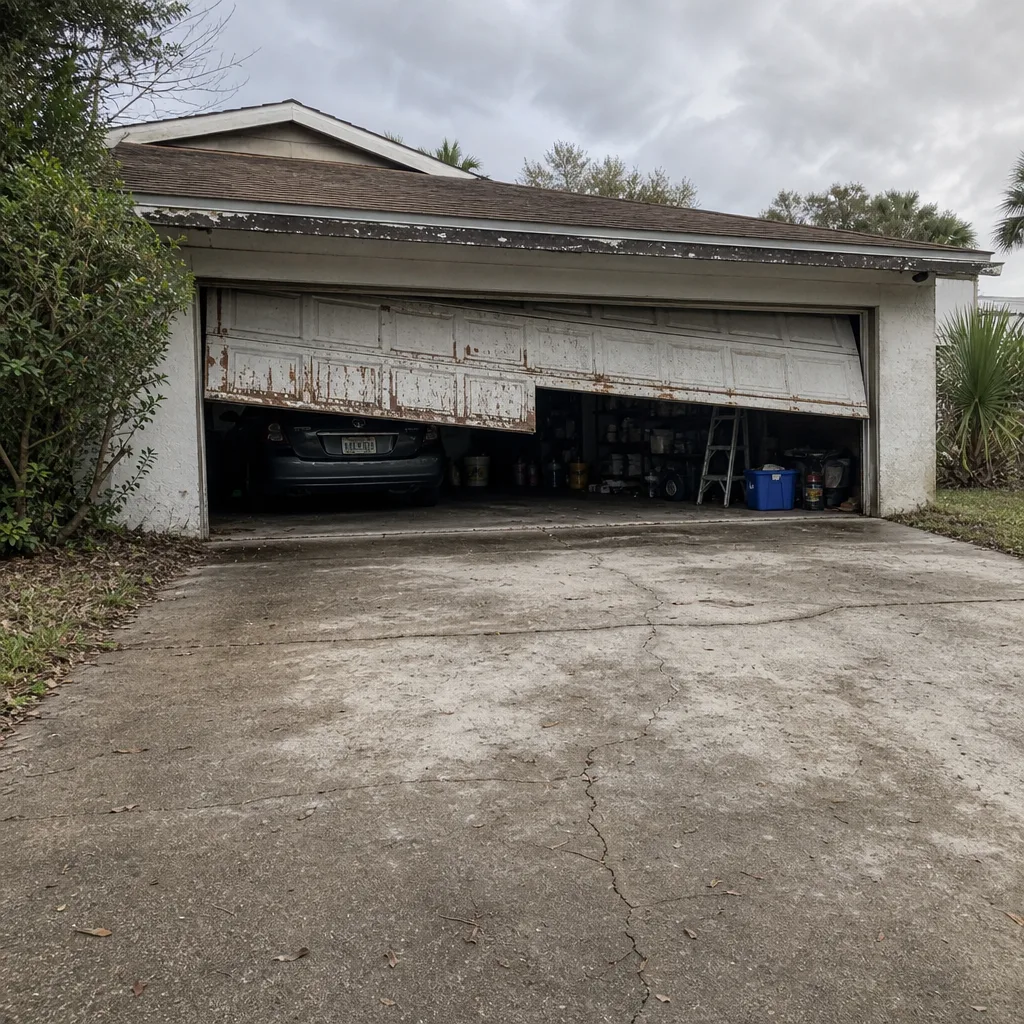 Before
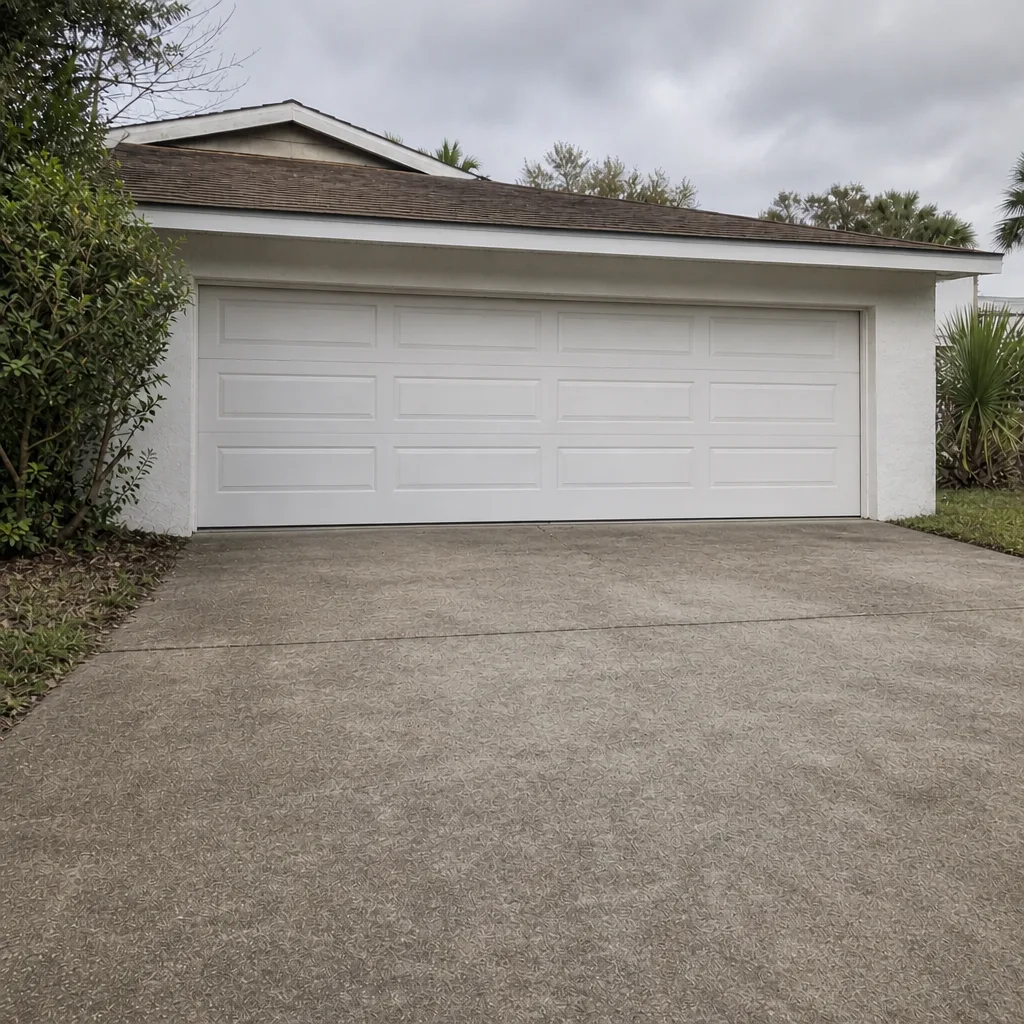 After
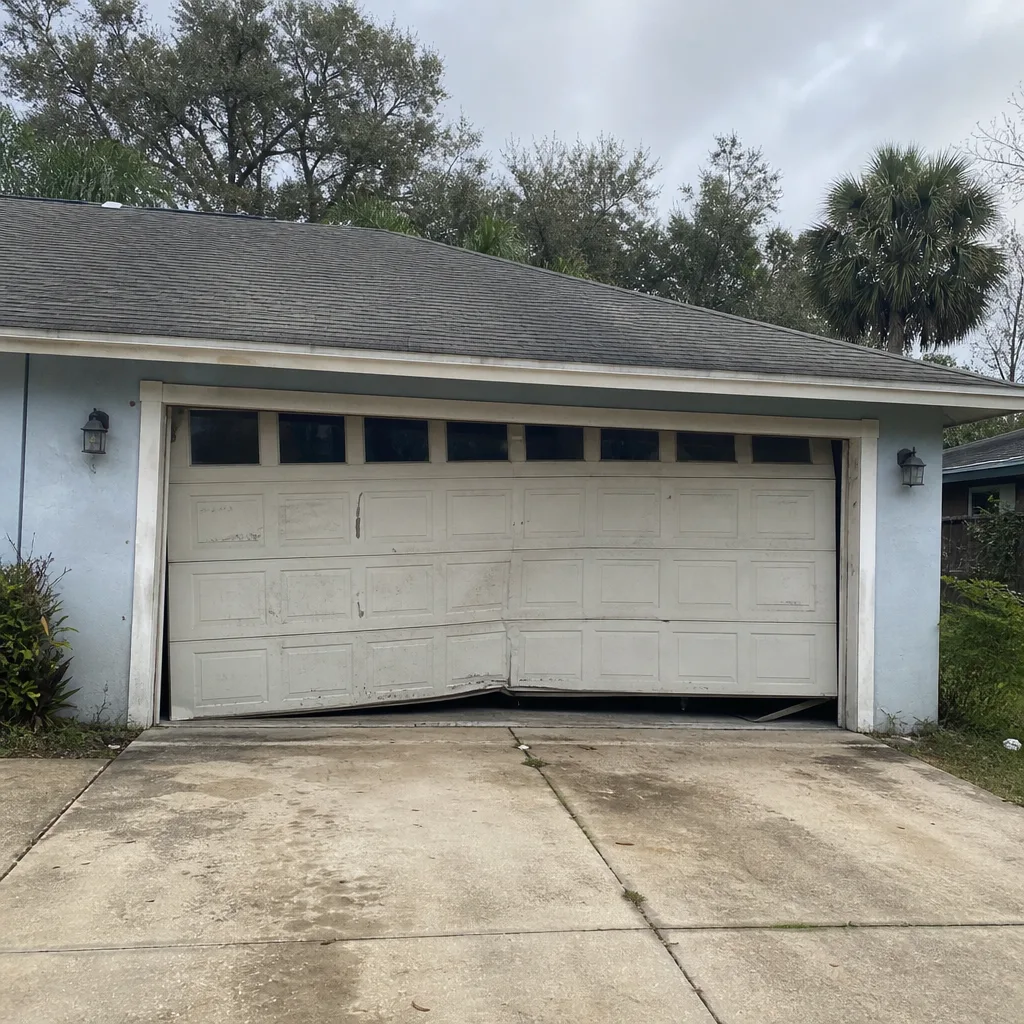 Before
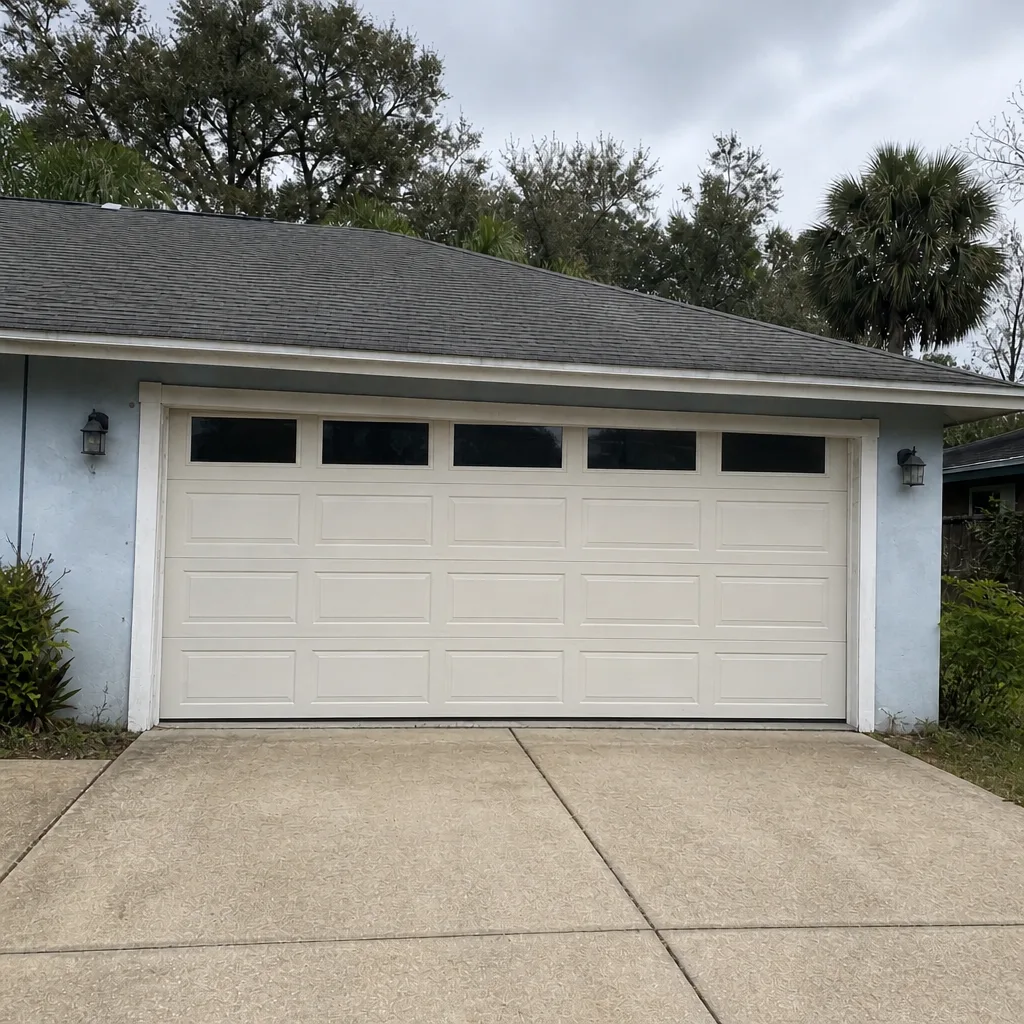 After
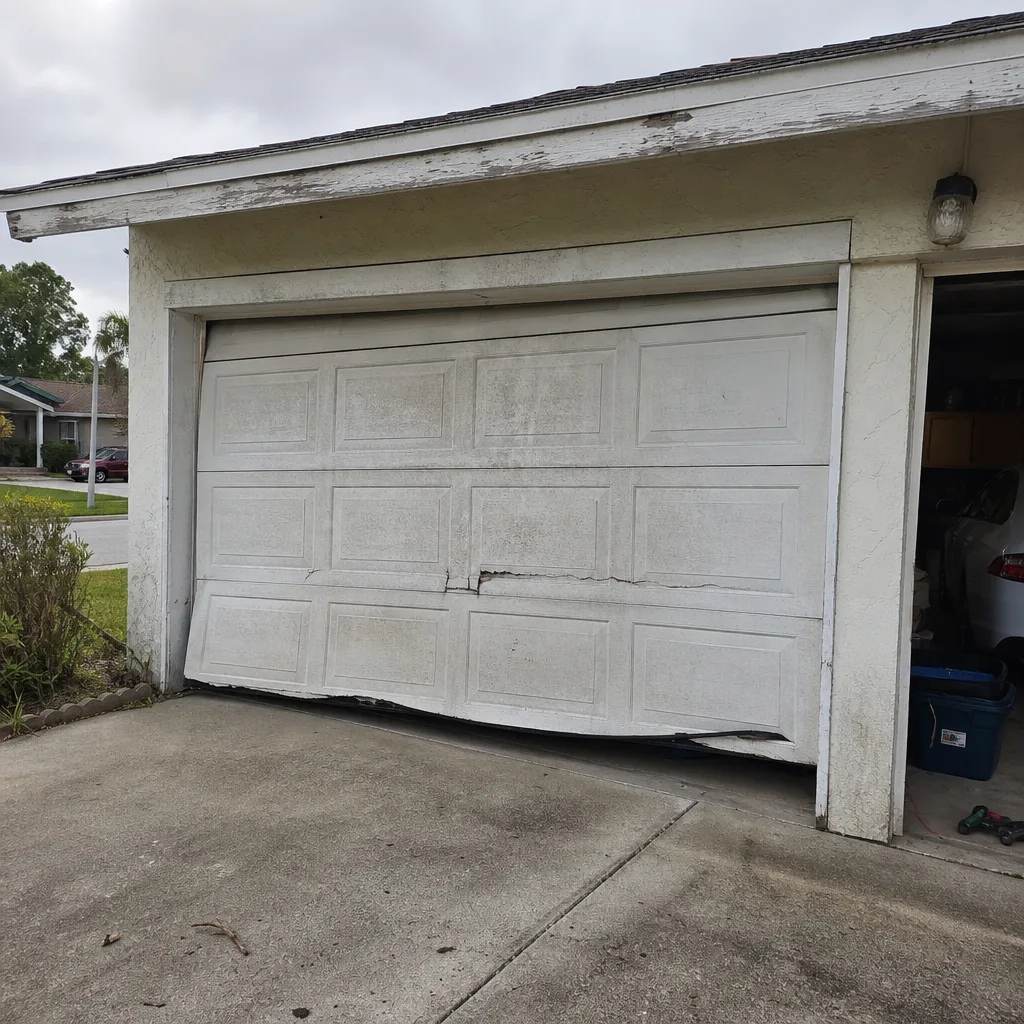 Before
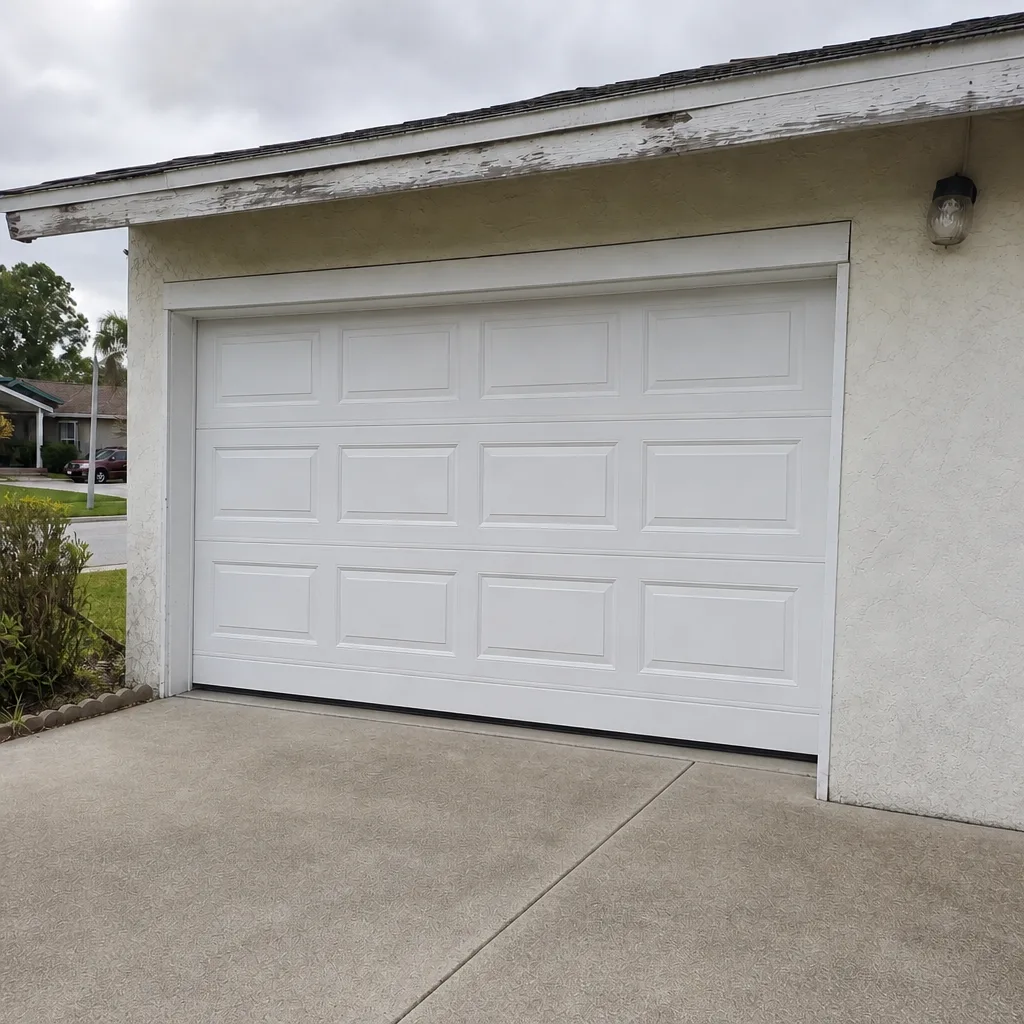 After
When to Call a Professional
Some jobs are fine to handle yourself; others aren’t. Call a professional if the door won’t open or close, if it moves unevenly or slams, if you hear a loud bang from the springs, if a cable looks slack or frayed, or if the opener runs but the door doesn’t move. Never attempt spring or cable repairs yourself: those parts are under extreme tension and cause serious injury when they let go. If a door fails on a Saturday, note that we’re closed that day and will book you for the next opening, Sunday through Friday, 7am to 7pm. Daytona Beach Garage Door Repair Pros offers free estimates in Daytona Beach. Call (866) 937-7159. We answer 24/7, with fast dispatch from 7am to 7pm. Our technicians have up to 9 years of experience, and the price is quoted and agreed before any work begins.
Frequently Asked Questions
A single-spring repair typically runs in the range of a few hundred dollars, and because springs are usually replaced in matched pairs when one fails, a pair costs roughly twice that. The written estimate sets the final price, and it’s quoted and agreed before any work starts. Call (866) 937-7159 for an exact quote; estimates are free.
Often yes, if you’re replacing the whole door or door and track assembly, because that can change its wind rating and structure. Simple repairs like springs and openers typically don’t need one. Confirm with the City of Daytona Beach building department, giving them your address and the door’s specifications. Call (866) 937-7159 and we can talk through your project before you commit.
At least once a year, with a dedicated check before June 1st, when hurricane season begins. Humidity and strong sun wear springs, tracks, and seals faster here than inland. The five-point check in this guide takes about ten minutes. If anything looks off, call (866) 937-7159 for a free estimate.
No. We quote the price in writing and agree it before any work starts, so you’re never handed an invoice bigger than the quote. If we find something else during the job, we discuss it with you first. Call (866) 937-7159 to get your estimate.
We’re trained to service LiftMaster, Chamberlain, Genie, Clopay, Amarr, Wayne Dalton, Craftsman, and Raynor equipment. That brand familiarity means correct parts and proper procedures rather than guesswork. If you’re unsure what’s on your door, call (866) 937-7159 and we’ll help identify it.
Keep people clear of the door, don’t force it, and call us right away. We answer 24/7, and if a call falls outside dispatch hours, it’s booked into the next opening, Sunday through Friday, 7am to 7pm. Call (866) 937-7159 for free estimates and a clear plan.
The Bottom Line
A garage door in Daytona Beach is a coastal mechanical system, and it needs to be treated like one. Humidity and strong sun wear springs, tracks, and seals faster here than in a dry market, so a ten-minute inspection before June 1st matters more than any showroom spec. Choose materials by their coating and climate rating, not their shine. Treat springs as a matched-pair job, confirm permit and wind requirements with the building department before you replace, and never handle the tension parts yourself. Repairs are usually quick; replacements are measured and scheduled. Whether it’s a snapped spring or a full new door, Daytona Beach garage door repair pros cover the whole system in one call. For a free estimate, call (866) 937-7159. We answer 24/7, with fast dispatch from 7am to 7pm, Sunday through Friday.
Written by the team at Daytona Beach Garage Door Repair Pros.