
Last updated November 21, 2026
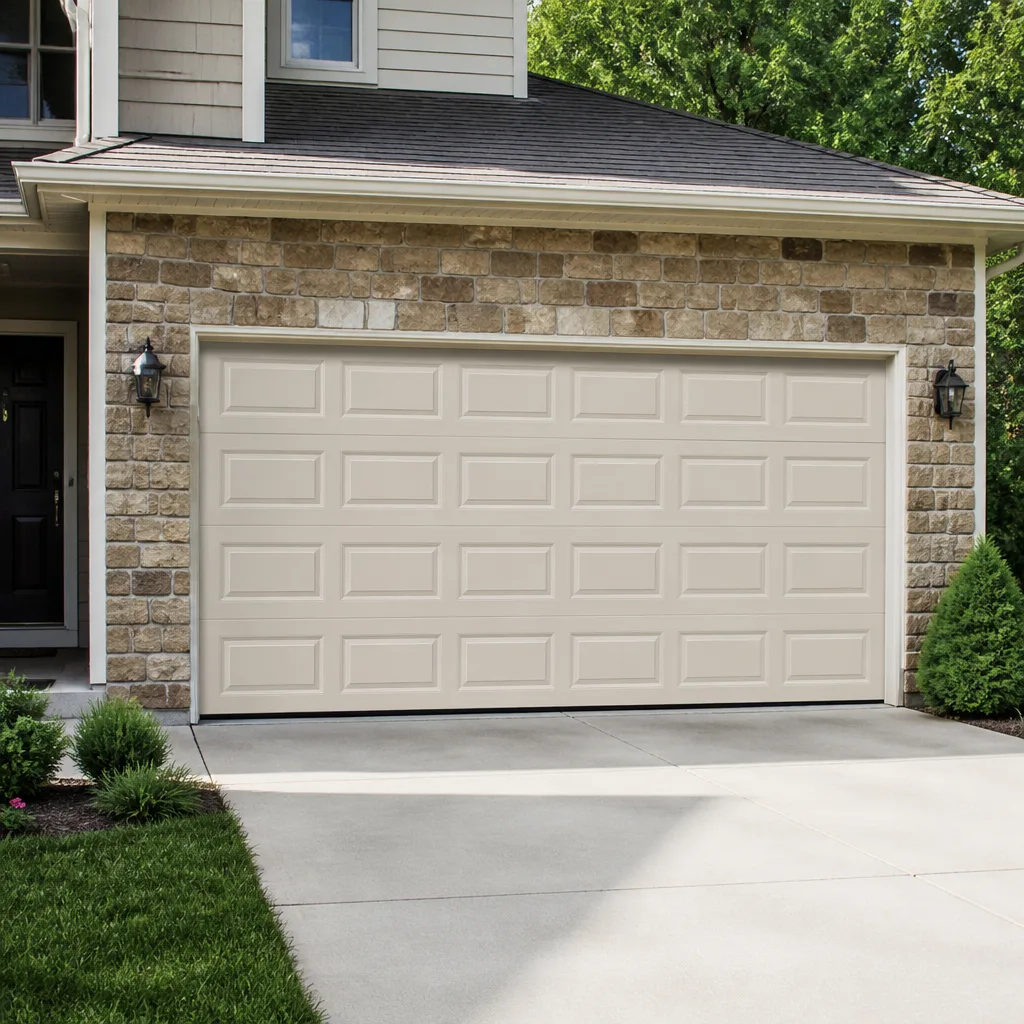 Raised-panel steel
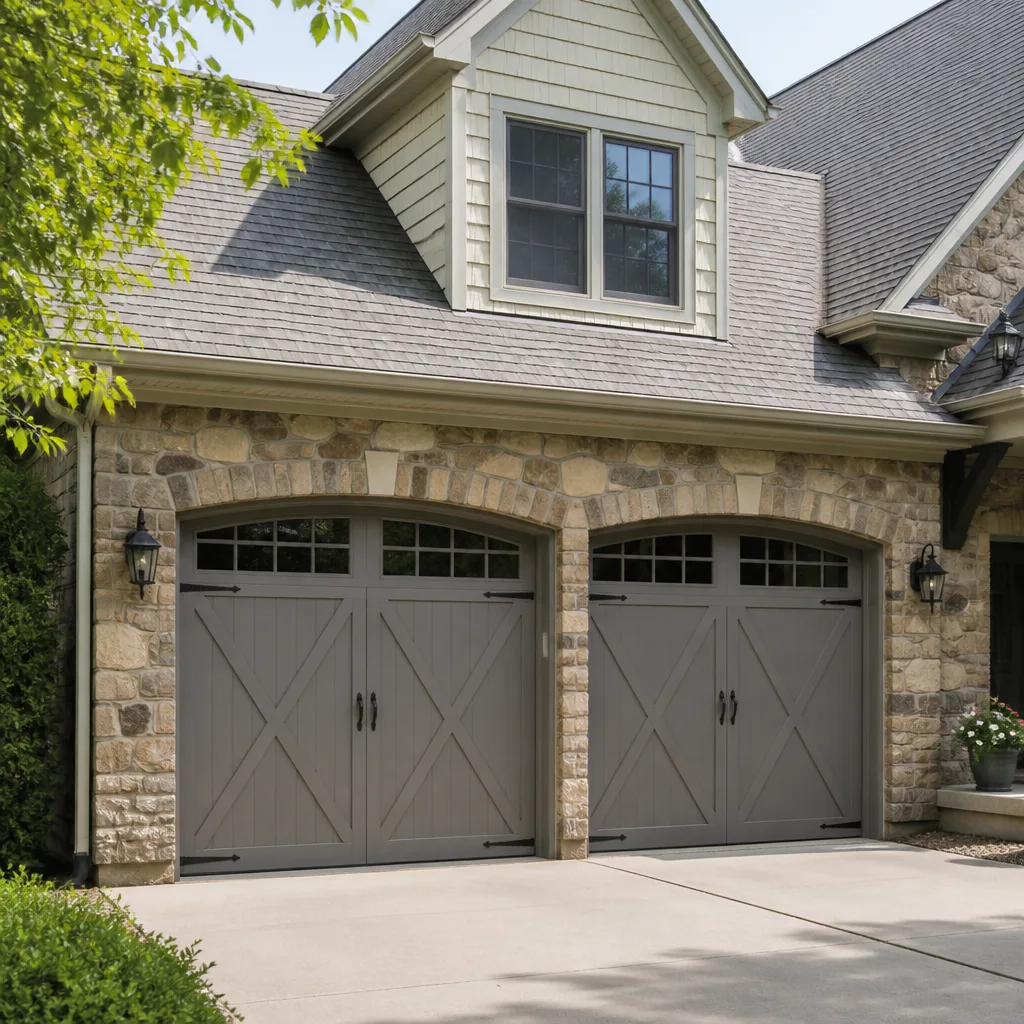 Carriage house
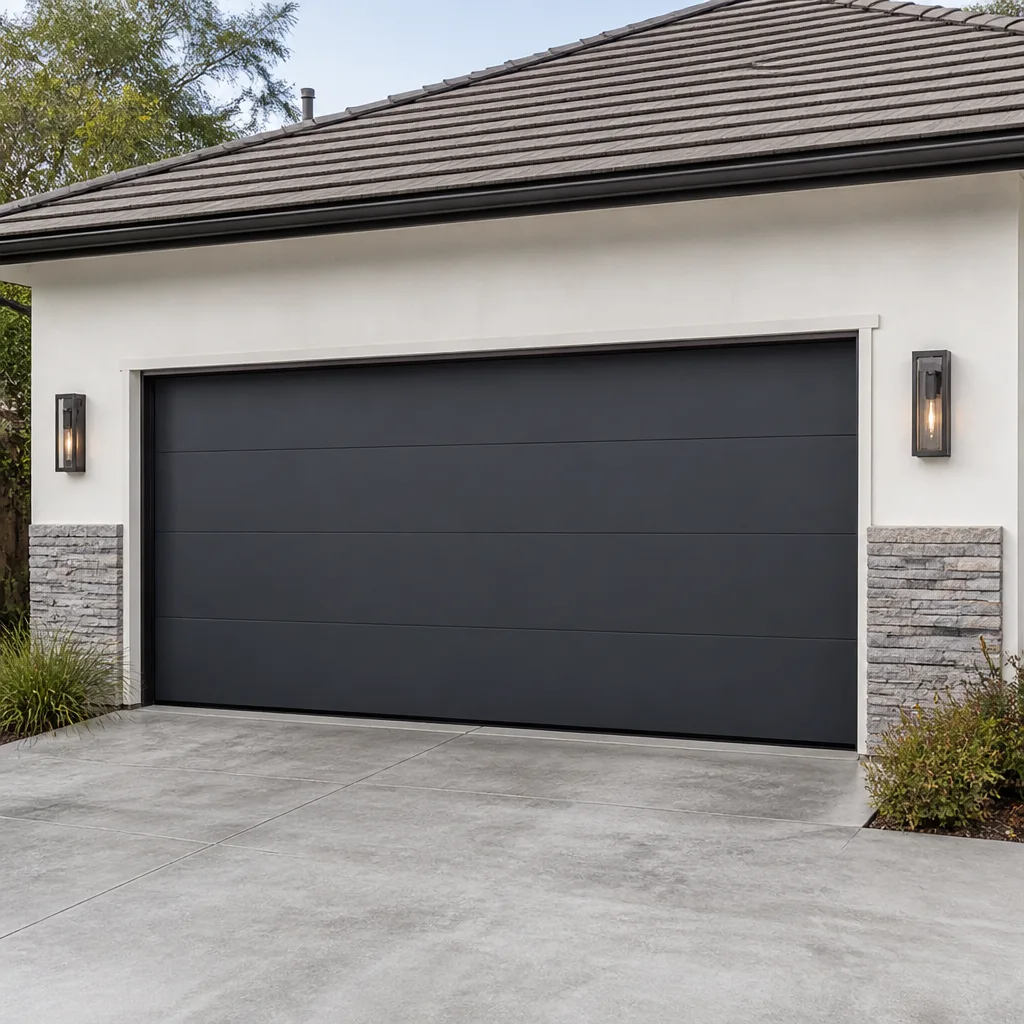 Modern flush
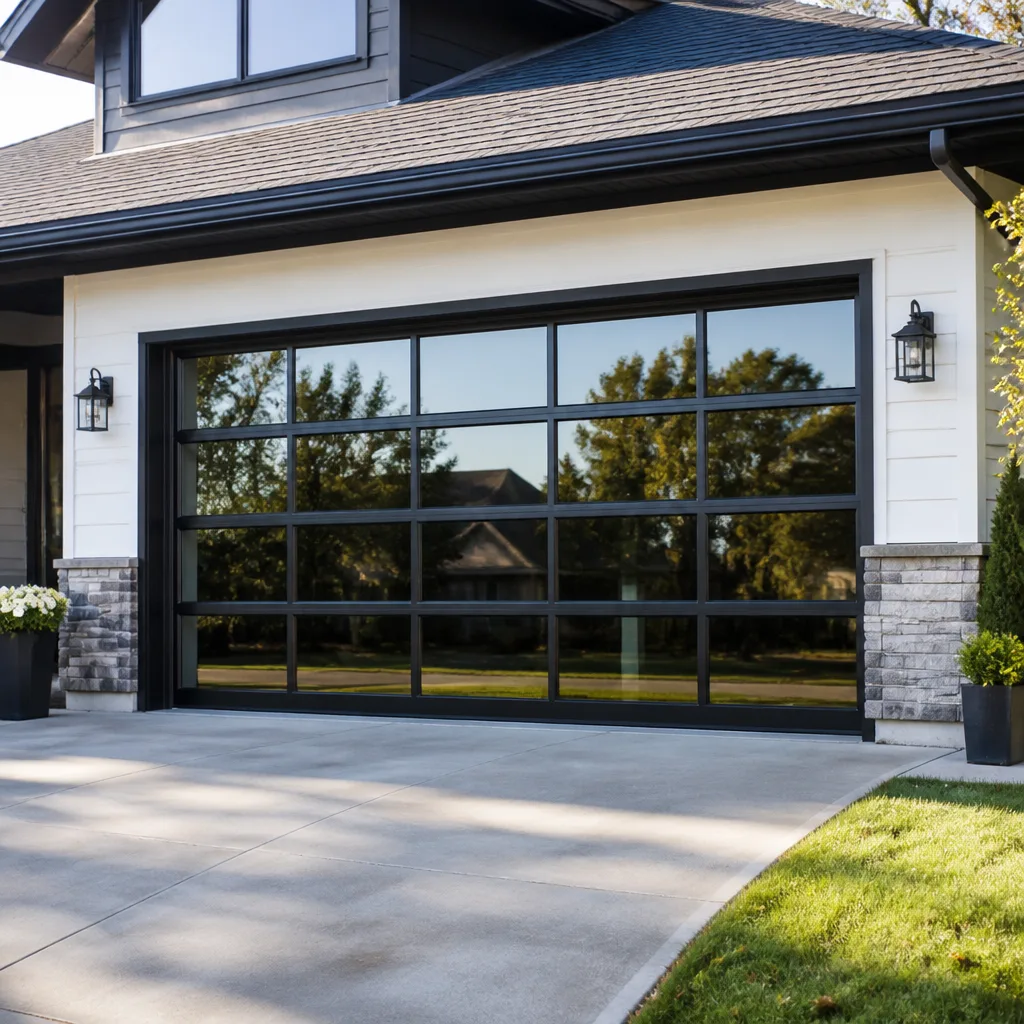 Full-view glass
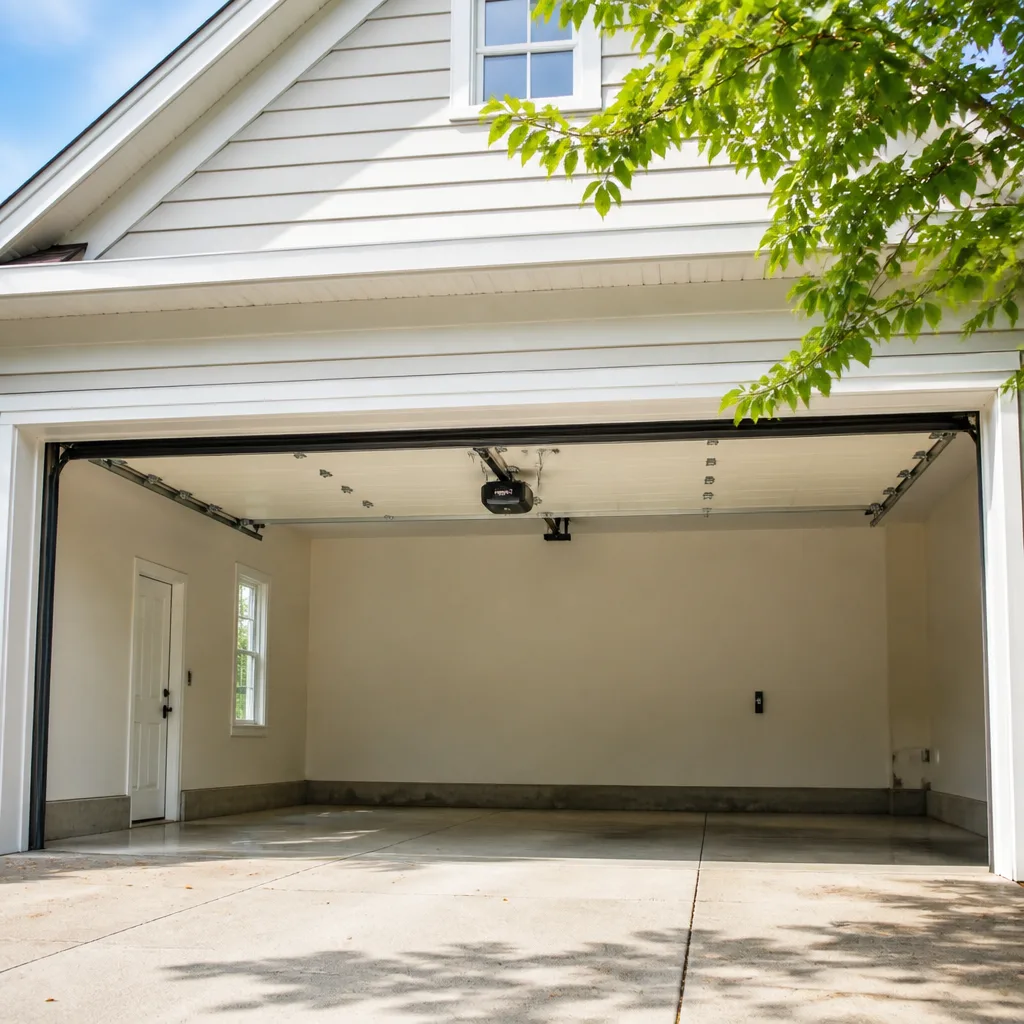 LiftMaster openers
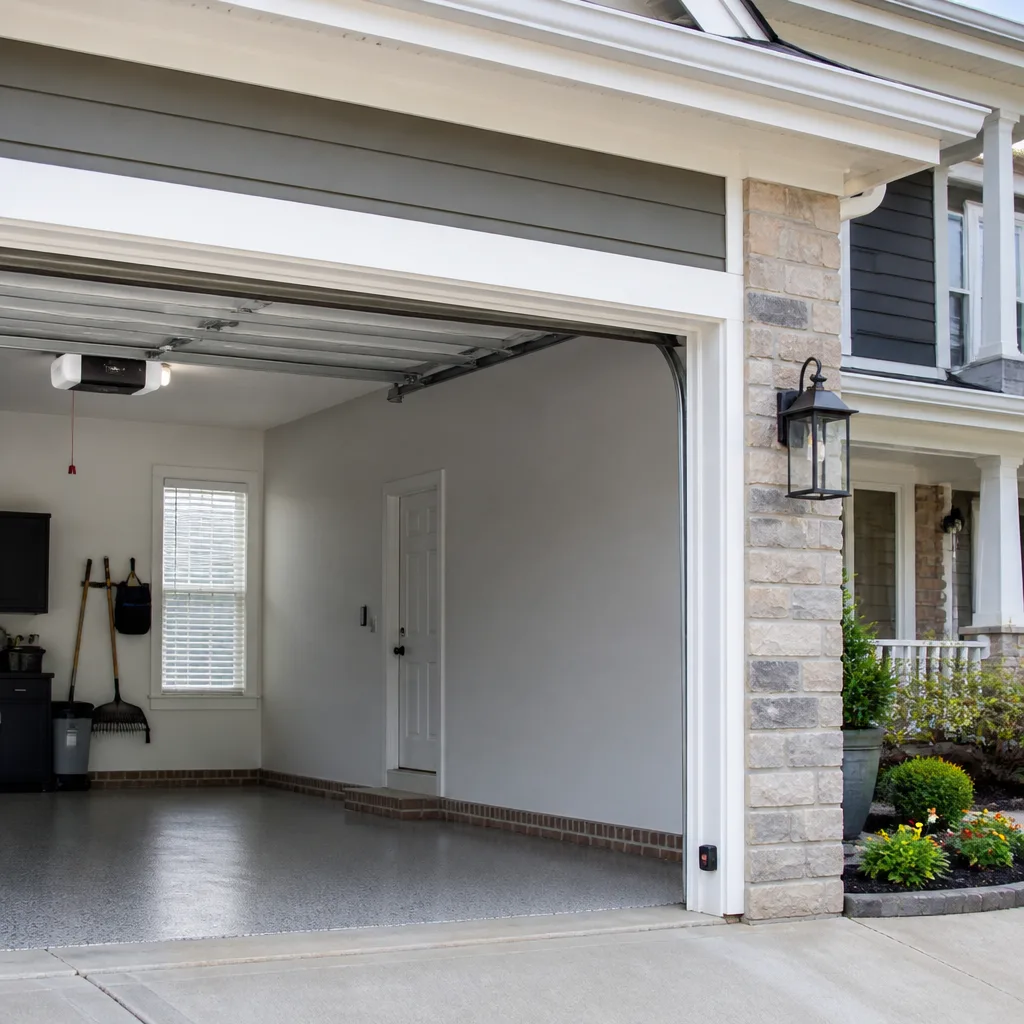 Chamberlain openers
Full 25-point door and opener safety check with every visit - springs, cables, rollers, tracks, and your LiftMaster or Chamberlain opener included
You get a price before we start. It does not change when the pro arrives.
Get your free estimateHow to Hire a Garage Door Contractor in Daytona Beach: A Step-by-Step Guide
Most homeowners in Daytona Beach screen a garage door contractor by asking for a price. That’s the wrong first question. Price tells you almost nothing until you know whether the person quoting it is licensed, carries the right kind of warranty, and will still be reachable when a torsion spring fails in a year. The real screen is paperwork and licensing, and it takes about 15 minutes online. This guide walks you through those checks step by step, explains what garage door specialty work actually covers under Florida rules, shows you how to compare apples-to-apples quotes, and flags the red flags that tend to show up in a busy contractor market. Daytona Beach is no exception.
Quick Answer
To hire a garage door contractor in Daytona Beach, verify their state license through the Florida DBPR license lookup, confirm they carry general liability insurance, ask specifically how their install meets Volusia County wind-load and permit requirements, and get a written estimate that lists door grade, spring type, track gauge and warranty before any work begins. A legitimate contractor welcomes all four questions. An unlicensed handyman will dodge at least two.
Styles & brands we work with
- Raised-panel steel
- Carriage house
- Modern flush
- Full-view glass
- LiftMaster openers
- Chamberlain openers
Table of Contents
- Why Hiring the Right Contractor Matters in Daytona Beach
- Step 1: Verify the Florida License Through the DBPR Portal
- Step 2: Confirm Insurance and Ask for the Certificate
- Step 3: Ask the Wind-Load and Code Questions
- Step 4: Compare Quotes Accurately Across Grades and Warranty Tiers
- Step 5: Spot the Storm-Surge Red Flags
- Step 6: Tell a Real Same-Day Commitment From a Bait-and-Switch
- The Questions to Ask Before You Sign
Why Hiring the Right Contractor Matters in Daytona Beach
Garage doors are the largest moving object attached to a house. Every time the door cycles, a torsion spring carrying hundreds of pounds of stored tension either releases smoothly or it doesn’t. When a spring or cable fails under load, the result is bent tracks, cracked panels and, in the worst case, injury to whoever is standing under it. This is why the hiring decision matters more than the price tag on the job. A properly trained technician understands spring tension math, cable anchoring and opener force settings. A handyman does not, and no amount of good intentions closes that gap.
In Daytona Beach specifically, the market adds a second layer of risk. High winds are a real design consideration for anything attached to a house here, and a garage door is no exception. An installation that ignores wind-load anchoring and reinforcement is not just sloppy; it may fail a permit inspection and it puts the homeowner in a bad position at claim time. We’ve seen local jobs where the door functioned fine on a calm day but had no business being attached to a Volusia County home during a named storm.
Add a third factor: the surging contractor population that arrives after every significant weather event and disappears within a couple of months. Homeowners in Daytona Beach who screen carefully during those windows save themselves a lot of follow-up repairs. The rest of this guide is the screen.
What “Garage Door Specialty” Actually Covers
Garage door work sits at an awkward intersection. It involves mechanical systems, low-voltage wiring (the opener motor and safety sensors), and, on new installs, structural anchoring. That means the licensing question isn’t just “are they licensed?” but “licensed to do what?” A general handyman license in Florida covers small jobs under a certain threshold but does not authorize structural work or permitted installation. A specialty or general contractor license does. We’ll get into the specific DBPR lookup in the next section, but understand the distinction now: if a permit is required for the installation, the person pulling it needs to hold a license that authorizes the work in the permit application.
Step 1: Verify the Florida License Through the DBPR Portal
Florida’s Department of Business and Professional Regulation (DBPR) maintains a public license lookup at myfloridalicense.com. It’s free, it’s fast, and it will tell you in under five minutes whether the person quoting your repair is actually licensed, if their license is current, and if there are any disciplinary actions on record. Every homeowner in Daytona Beach should run this before any deposit changes hands.
Here’s the exact process:
- Go to myfloridalicense.com and open “Verify a License.”
- Search by the individual’s or company’s name, or by license number if they provide one.
- Match the license type to the work being quoted. Installation and structural anchoring require more than a handyman license. Pure repair work sits in a narrower category, but should still be traceable to a licensed entity.
- Check the license status, expiration date and any disciplinary history listed.
- Screenshot the result. That way if the license number they texted you doesn’t match what you find, you have a record.
If the person can’t tell you their license number without hesitating, that’s your answer. A legitimate contractor quotes their license number before being asked. We can’t speak for every contractor in Daytona Beach, but we can tell you that the licensed ones are happy to be checked.
What If They’re Not Licensed?
Walk away. There is no version of this where the unlicensed contractor is the smarter choice. An unlicensed installer has no bond to fall back on, no insurance oversight, and no licensing board to complain to if the door fails. On top of that, most manufacturer warranties (including the door and opener brands we service, like LiftMaster, Wayne Dalton and Raynor) become void the moment the installation is performed by an uncertified installer. You’re buying a garage door with no warranty coverage, even if the door itself is fine.
Step 2: Confirm Insurance and Ask for the Certificate
General liability insurance is the second check. A garage door install is a physical project: drilling into framing, hanging a heavy door, testing a spring under tension. If something goes wrong on the job, you want the contractor’s insurance to be the party that pays, not yours. Ask for the certificate of insurance directly. A licensed contractor sends it without argument.
Two specific coverages to look for:
- General liability: covers property damage and third-party injury at the jobsite.
- Workers’ compensation: covers injuries to the technicians on the job. If a technician is injured in your garage and the contractor doesn’t carry workers’ comp, the claim can end up on your homeowner’s policy.
Verify the certificate is current. An expired certificate is worse than none, because it suggests the contractor is either disorganized or hoping you won’t look. In our experience, the contractors who volunteer their insurance paperwork are the same ones who show up on time for the follow-up call.
Step 3: Ask the Wind-Load and Code Questions
This is the section where a Daytona Beach homeowner gets more value from a contractor than a homeowner in a calmer climate. Ask the contractor directly: “Does my installation meet the current Volusia County wind-load requirements for this product, and will you pull the permit?” The answer tells you everything about their professionalism.
Wind-load compliance for a garage door typically involves rated door panels, specific anchoring hardware, and sometimes reinforcement struts or a bracing kit. The exact requirement depends on your home’s location and construction, so the honest answer from a contractor is, “Let me verify what your property requires.” A dishonest or lazy contractor says “it’s fine, don’t worry about it.” Don’t accept that.
Ask the following four code questions on every quote:
- Will this installation require a building permit in Volusia County?
- Does the door model you’re quoting carry a wind-load rating appropriate for this location?
- Will the anchoring hardware in the quote meet the current code requirements for that rating?
- Who pulls the permit, and is it included in the quote?
Permit rules vary by jurisdiction and change over time. If a contractor isn’t sure, the answer is to call Volusia County’s building department, not to skip the question. Any contractor who tells you permits “aren’t required for garage doors” is telling you they don’t want the inspection.
Step 4: Compare Quotes Accurately Across Grades and Warranty Tiers
You will get three quotes for the same door, and they will look identical on the page until you dig into the spec. The reason is that “a garage door replacement” is not a single product. It’s a system of components, and the components have grades. If you don’t normalize the quotes before comparing prices, you’re comparing a fully loaded job to a stripped-down one and calling the stripped-down one “cheaper.”
The components to line up side by side:
- Door panel grade: steel thickness, insulation rating, and finish. A builder-grade panel and a premium insulated panel are not the same product, even when they’re both white steel.
- Spring type: standard cycle vs. high-cycle springs. High-cycle springs cost more and last longer. A cheaper quote that swaps in standard springs is not the same quote.
- Track gauge: the steel thickness of the track. Thinner track flexes and bends; heavier gauge does not.
- Hinges and rollers: nylon rollers and heavy-duty hinges cost more but reduce noise and last longer.
- Opener tier (if included): belt-drive vs. chain-drive, Wi-Fi vs. non-connected, warranty length. Compare the same model across quotes.
- Warranty: manufacturer warranty on the door and opener, plus the labor warranty the contractor extends. These are two separate things and both matter.
If a quote doesn’t itemize those components, that’s not a quote. That’s a number. Ask for the itemized version before you compare. On repair work the same rule applies: a spring repair quote should say whether it’s one spring or a matched pair, and what spring grade. Replacing one spring when the pair was installed together usually means the other is right behind it.
Step 5: Spot the Storm-Surge Red Flags
After a significant weather event, Daytona Beach gets a wave of out-of-state crews with magnetic signs on their trucks and nothing else to show for themselves. Some do decent work. Most don’t, and by the time you figure that out, they’re gone. Here are the specific tells.
Red Flag 1: No Local Address
Ask for a physical business address in Volusia County. A P.O. box in another state and a phone number that goes straight to a call center is not a local business. A legitimate local contractor has a verifiable address, even if the address is a home office. If they can’t produce one, they can’t be found when they need to come back and fix their work.
Red Flag 2: Cash Upfront, Full Amount
Florida law restricts how much a contractor can collect before work begins, and reputable contractors don’t ask for the full job total in cash on day one. A deposit for materials is normal. Full payment upfront, especially in cash, is a red flag in any market, and it’s a much bigger one right after a storm. If they push hard on cash, walk.
Red Flag 3: Vague Written Estimates
“Garage door replacement: $2,200” is not a quote. It’s a vibe. A real estimate lists the door model, spring grade, track gauge, opener details, permit status and warranty. If the estimate is a text message or a single handwritten line, they’re planning to argue about scope later. Don’t let the argument happen on your driveway.
Red Flag 4: No License Number on the Estimate
Florida law requires licensed contractors to include their license number on written estimates and contracts. If the number isn’t on the paperwork, either it doesn’t exist or they’re hiding it. Either way, you have your answer.
Red Flag 5: “We Can Start Today” With No Inspection
Every legitimate installation quote starts with measuring, configuration and a written price. “We can start today” on a replacement door, with no measurements and no order lead time, is not a real plan. Repairs are different: a qualified technician can often diagnose and repair same day, which we’ll get to next.
Step 6: Tell a Real Same-Day Commitment From a Bait-and-Switch
“Same-day service” means something specific on a garage door. On a repair, it should mean the technician can diagnose the failure and complete the fix, or at least get the door operational, in a single visit. On a replacement, it should mean a same-day estimate, not a same-day install, because the door has to be measured, ordered in the correct configuration and scheduled. Any contractor promising to replace a full door the same day you first called is either pre-stocking the exact model you need (unlikely) or planning to install whatever they have on hand.
Here’s what a real same-day repair commitment looks like:
- The contractor asks enough questions upfront to book the right technician with the right parts. Door brand matters here. A technician who works with Craftsman, LiftMaster and Chamberlain every week knows the differences.
- The quote covers the diagnosis and the repair, not just a house call fee.
- The contractor tells you the price before any work starts, not after.
- If the spring or opener has to be ordered, they tell you that upfront and schedule the return visit.
What a bait-and-switch looks like:
- “Sure, we’ll be there today,” followed by no-show or a tech who arrives without parts.
- A quote that expands significantly once the tech is on-site, with no written estimate beforehand.
- A promise of same-day install on a full door replacement.
For local service in Daytona Beach, you can call us at (866) 937-7159 for a free estimate. We answer 24/7 and dispatch from 7am to 7pm, Sunday through Friday. Same-day repair is available when the parts and the schedule allow it; on installation and replacement we send a written price after measuring, because that’s how a real install quote works.
The Questions to Ask Before You Sign
Here is the condensed checklist. Ask every one of these. A contractor who answers all of them without flinching is worth keeping.
- What is your Florida license number, and what license type is it?
- Are you insured, and will you send me the certificate of insurance?
- Will this job require a permit in Volusia County, and does your quote include pulling it?
- Does the door model in this quote meet current wind-load requirements for my property?
- Is this one spring or a matched pair, and what cycle rating are the springs?
- What door, opener and labor warranty do you provide, and in writing?
- What brands do you work with most often? (The right answer names specific ones, not “all of them.”)
- If something fails in six months, who do I call and what’s the process?
- Is the estimate written, itemized and signed before any work starts?
- Do you accept card payment, or cash only?
The answers to those ten questions will separate the real contractors from the pretenders faster than any online review. If you want to see what a written repair estimate should look like in detail, our guide to garage door repair walks through the component list.
Common Mistakes to Avoid
- Hiring on price alone. The lowest quote is almost always the one with standard springs, builder-grade panels and no permit. You’ll pay for the difference in two years when the spring fails a year early.
- Not verifying the license. The DBPR lookup takes four minutes and prevents the single most expensive mistake you can make on this job. Skipping it because the contractor “seems honest” is how unlicensed work happens.
- Accepting a verbal estimate. A text message with a dollar sign is not an estimate. Get it in writing, itemized, with the license number on the document.
- Paying the full job in cash upfront. Florida law restricts upfront deposits for contractor work. A full-cash upfront ask, especially right after a storm, is a red flag regardless of how friendly the contractor is.
- Assuming same-day install is possible. A full door replacement requires measurement, ordering and scheduling. Same-day is for repairs. Any contractor who blurs that line is either confused or misleading you.
- Skipping the wind-load question. In Daytona Beach, garage doors are part of the wind-load envelope. An install that ignores that is a code problem and an insurance problem waiting to surface.
- Not asking about brands upfront. If a technician mostly works on one brand, they may not carry the right parts for the door on your house. Ask first, book right.
- Ignoring the spring pair. A matched pair of springs installed together usually needs replacing together. Replacing one and not the other often means a second call within months.
See the difference
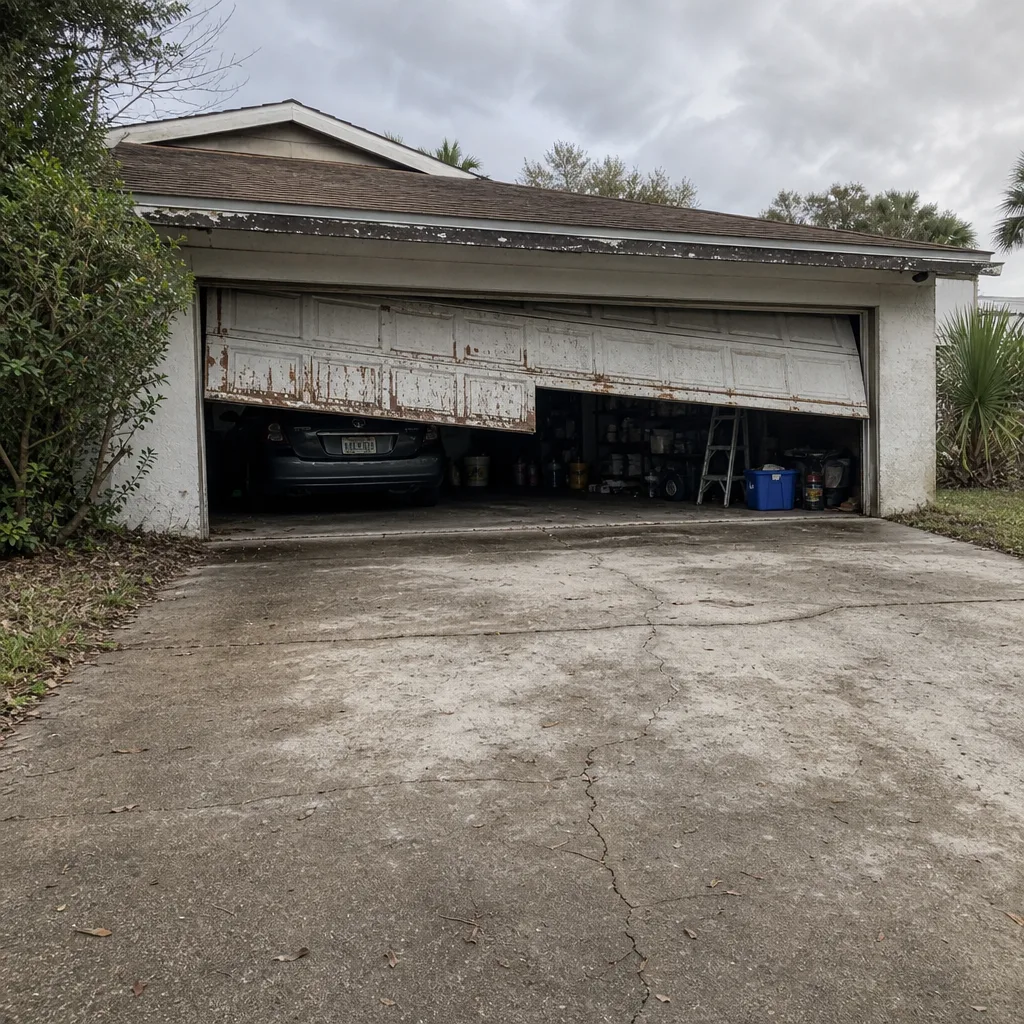 Before
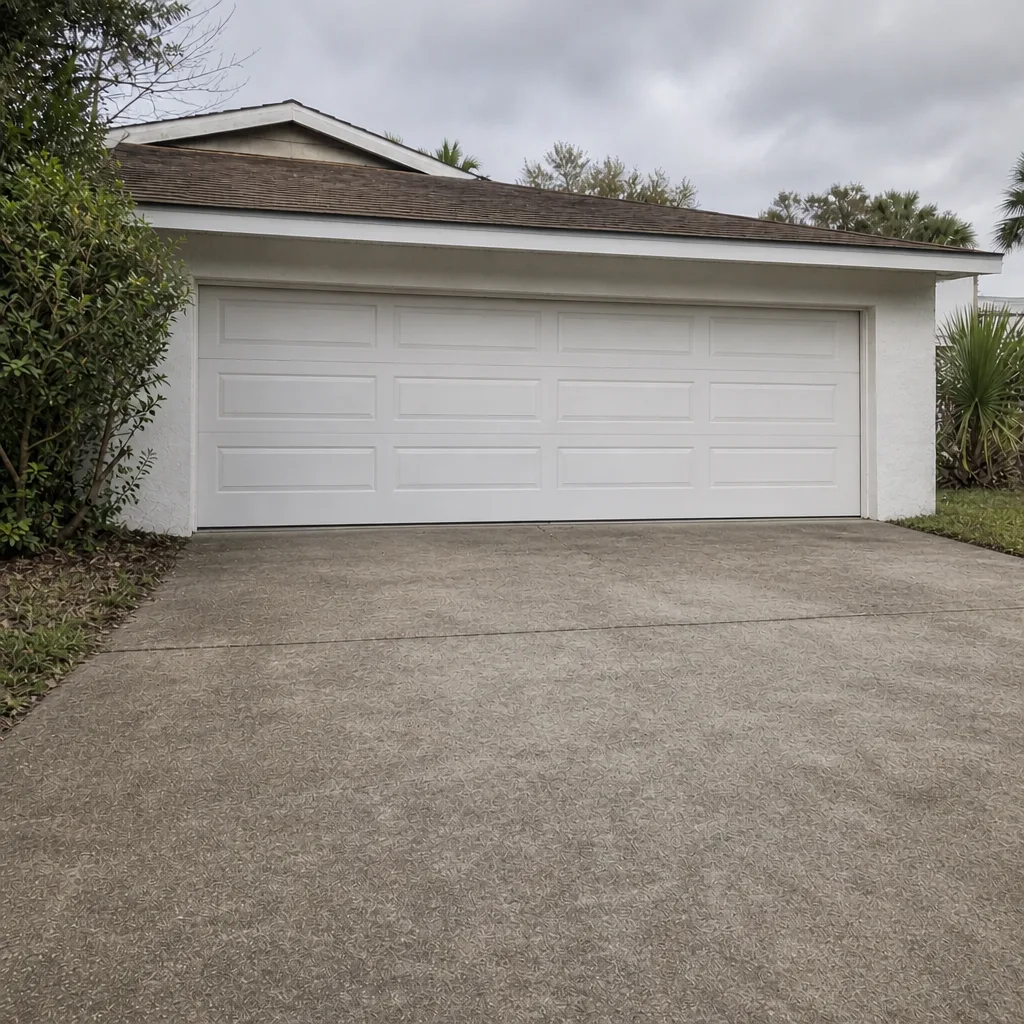 After
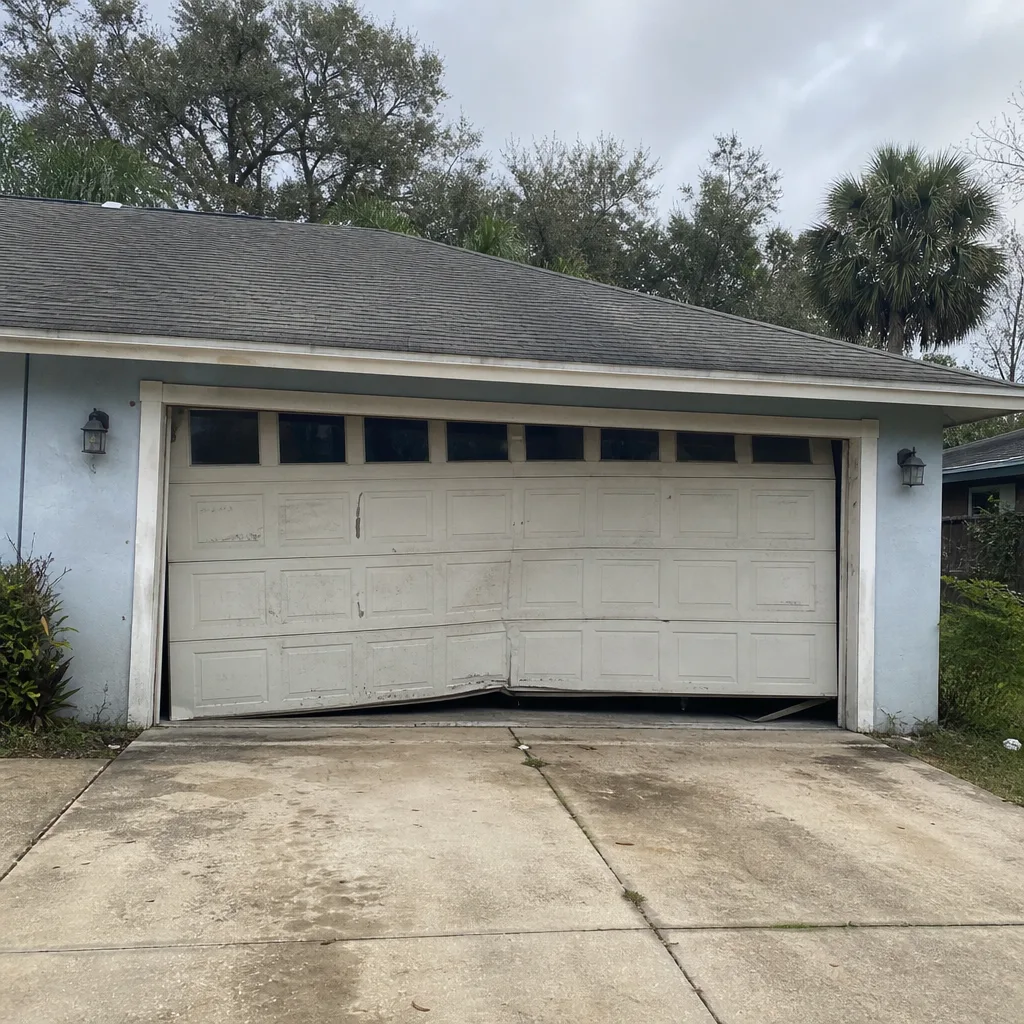 Before
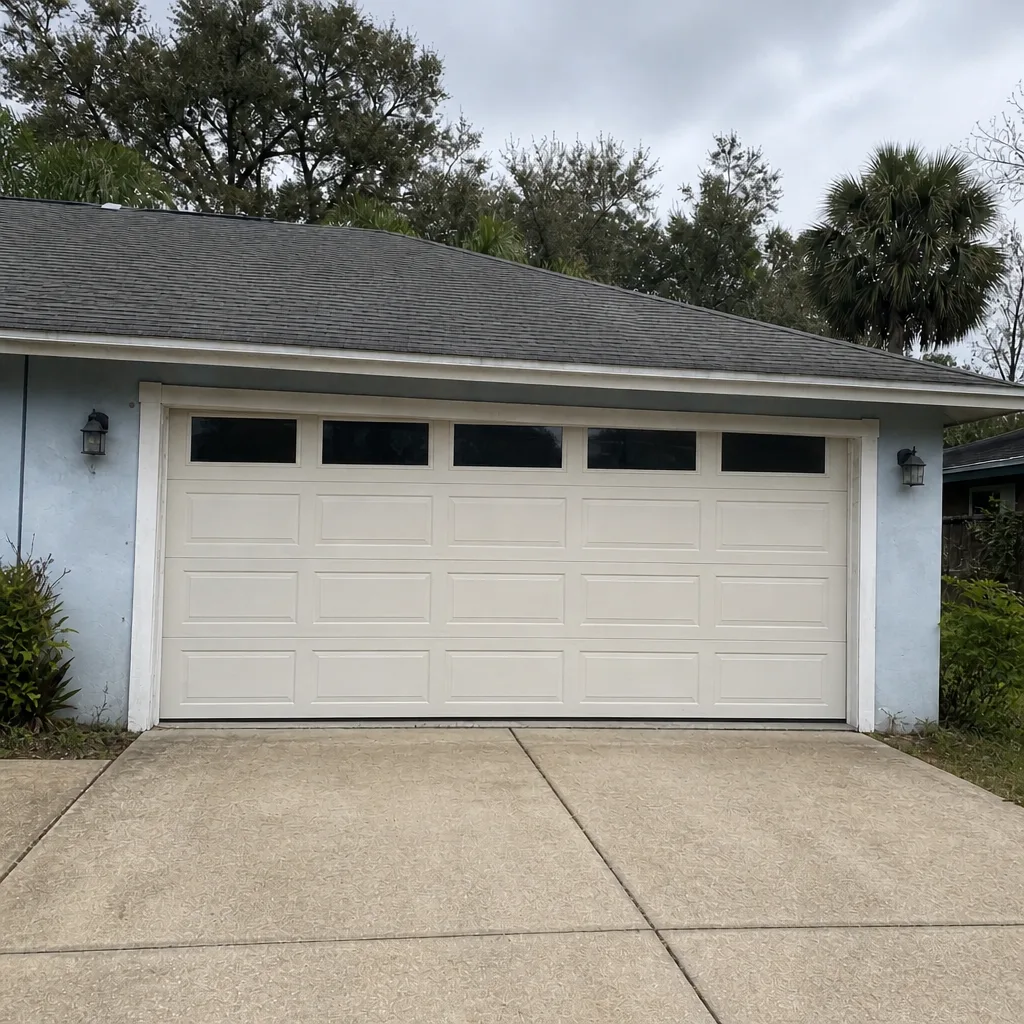 After
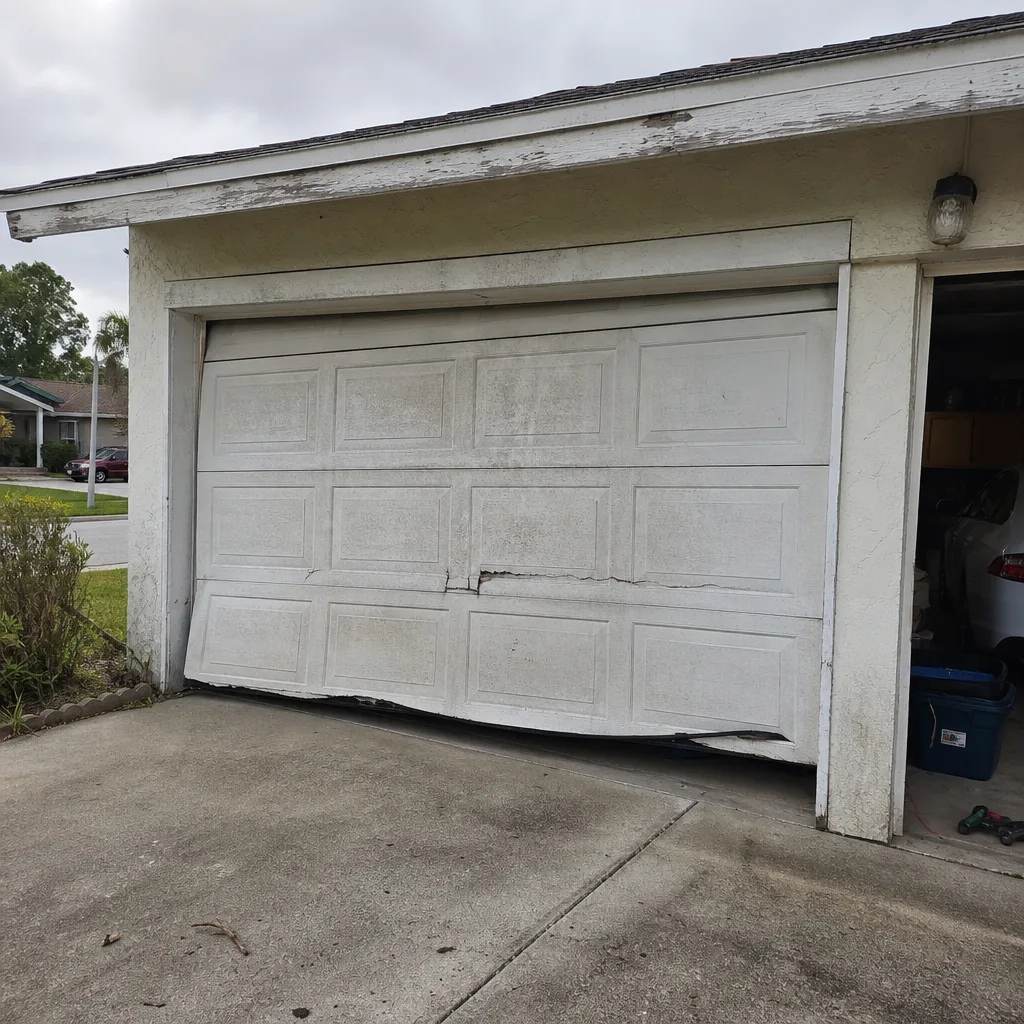 Before
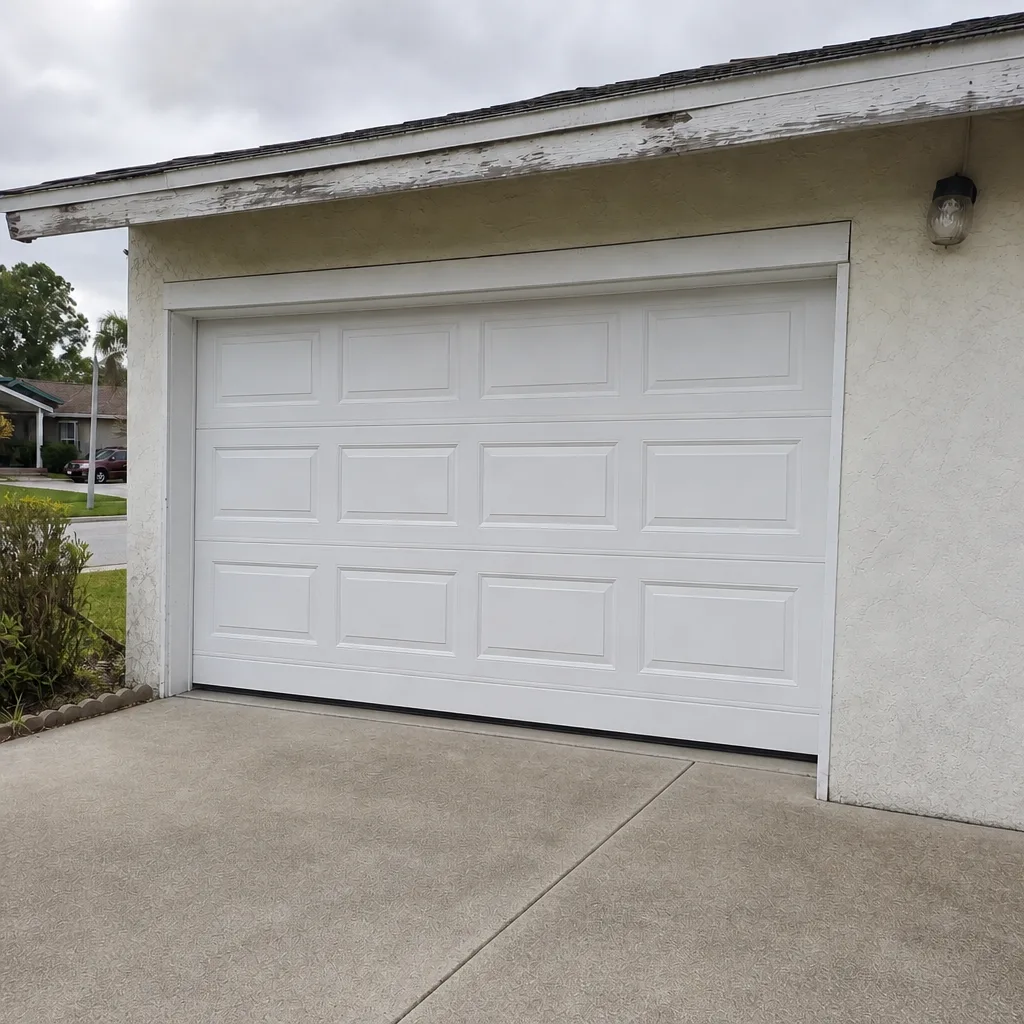 After
When to Call a Professional
Some garage door problems are cosmetic and can wait. Others are genuinely dangerous and should not be touched. Call a professional when a spring snaps or sags (torsion springs hold immense stored energy and can cause serious injury), when a cable is loose or frayed, when the door comes off its track, when the opener motor cycles but the door doesn’t move, or when a door has become misaligned to the point that it doesn’t sit flush when closed. Call immediately if the door is stuck open and the garage contains anything you wouldn’t leave in the front yard. Also call a professional before a storm season to have the springs, cables and opener force settings inspected, especially if the door hasn’t been touched in several years. For a same-day repair in Daytona Beach, our team at Daytona Beach Garage Door Repair Pros offers free estimates, and you can reach us at (866) 937-7159. Spring repairs specifically are technically demanding; our garage door spring repair page walks through what the work involves and what to expect.
Frequently Asked Questions
Yes, you should always use a licensed contractor for garage door work, and for any installation that requires a permit, a license appropriate to that scope is legally required. Florida’s DBPR maintains a public license lookup, and legitimate contractors quote their license number on the written estimate. Unlicensed work voids most manufacturer warranties on the door and opener, so the licensing check is as much about protecting the warranty as it is about safety.
Go to myfloridalicense.com and use the “Verify a License” lookup. Search by name or license number, then match the license type to the scope of work being quoted. A general handyman license is not sufficient for permitted installation work. Check the license status, expiration and any disciplinary history before paying a deposit. Call (866) 937-7159 if you’d like a written estimate from a licensed local professional first.
A real estimate lists the door model or spring specification, the quantity (one spring or a matched pair), the gauge of track if it’s being replaced, the opener details if involved, the permit status, the warranty terms and the contractor’s license number. If the estimate is one line item with no detail, ask for the itemized version before comparing it to other quotes. For a free written estimate in Daytona Beach, call (866) 937-7159.
Yes, same-day repair is often possible on spring, opener and mechanical issues when the correct parts are available. The critical distinction: same-day is a repair commitment, not an installation commitment. A full door replacement requires measuring, ordering the correct configuration and scheduling, so those jobs get a written price and a scheduled date. If a contractor promises same-day installation on a new door, ask what the plan actually is.
Pricing is set per job by a free written estimate, and final cost depends on the specific failure, the parts required and the door model. We give you a written price before any work starts, and the written estimate is the price you pay. That’s why we don’t quote repair prices over the phone: too many variables differ between one door and the next. Call (866) 937-7159. We answer 24/7. Fast dispatch from 7am to 7pm, Sunday through Friday.
Our technicians are trained and equipped to service eight major garage door brands: LiftMaster, Chamberlain, Genie, Clopay, Amarr, Wayne Dalton, Craftsman and Raynor. That matters for hiring because parts have to match the system already on your house. When a technician knows the brand, they carry the correct spring, opener module and hinge hardware, which cuts the number of return visits. If you’re not sure of your door’s brand, tell us what you see and we’ll identify it. Our garage door opener repair page covers brand-specific opener work in more detail.
Call us at (866) 937-7159 and we’ll book the return visit under the warranty terms in your original estimate. This is one of the reasons to insist on a written estimate that spells out the labor warranty, manufacturer warranty and what’s covered: if there’s no document, there’s no enforceable warranty. A contractor who won’t put warranty terms in writing is telling you they don’t intend to honor them.
Yes. Our work covers repair, opener service, spring repair and full replacement, so a customer can start with a repair call and move to a replacement installation without switching contractors. Recommendations on a replacement start with a free measure and a written price, then the door gets ordered and scheduled. New door selection involves more decisions than repair, and our technicians can walk you through panel grade, insulation, opener compatibility and wind-load requirements that apply in Volusia County.
The Bottom Line
Hiring a garage door contractor in Daytona Beach comes down to a short screening process you can complete in about 15 minutes: verify the license on the DBPR site, ask for the insurance certificate, ask the wind-load and permit questions, demand an itemized written estimate, and know the difference between a real same-day repair commitment and a bait-and-switch. The contractors who pass all five checks are the ones you want. The ones who don’t won’t survive the call. Everything else, from door grade to spring type to warranty tier, becomes a fair comparison once you’ve normalized the quotes. And if the door fails in the middle of a weekend, the right answer is still the same: a licensed contractor, a written price, and work that holds up. Call (866) 937-7159 for a free estimate. We answer 24/7. Fast dispatch from 7am to 7pm, Sunday through Friday.
Written by the team at Daytona Beach Garage Door Repair Pros.