
Last updated November 21, 2026
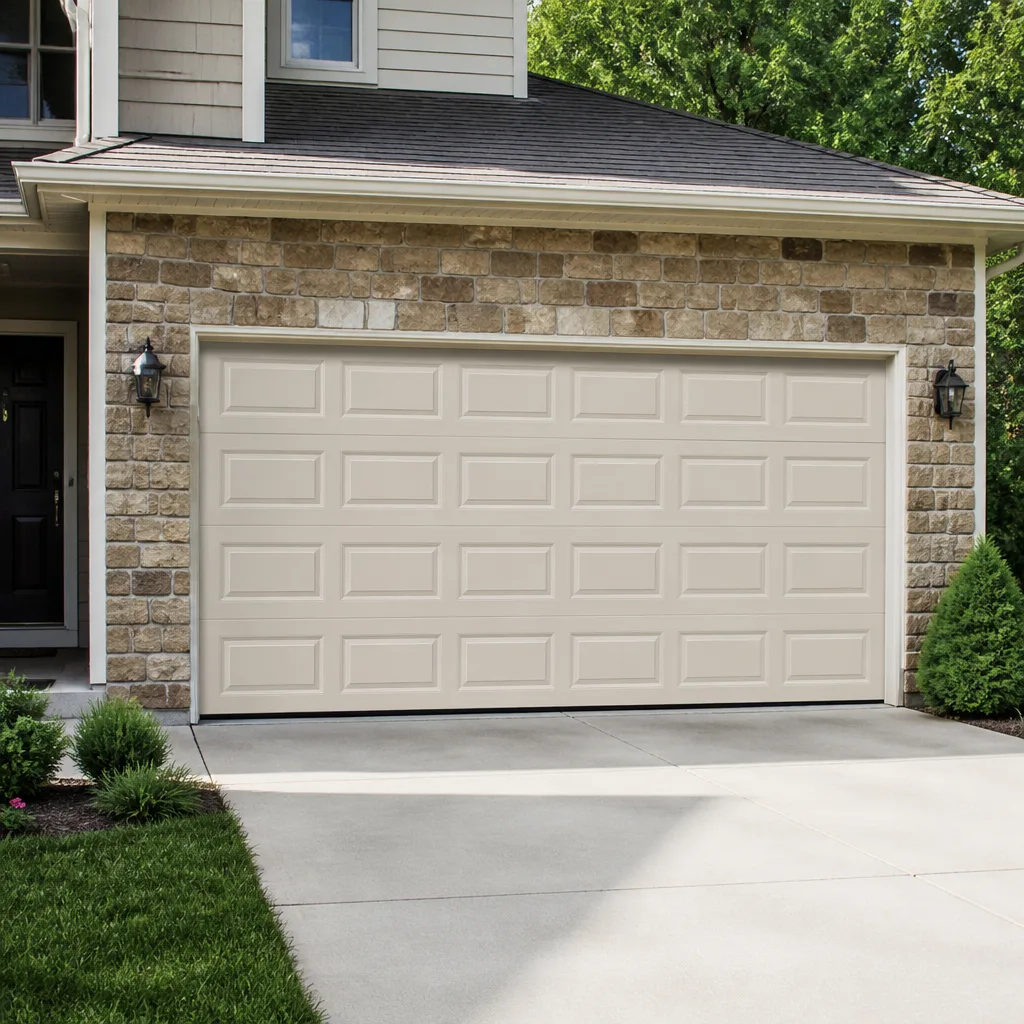 Raised-panel steel
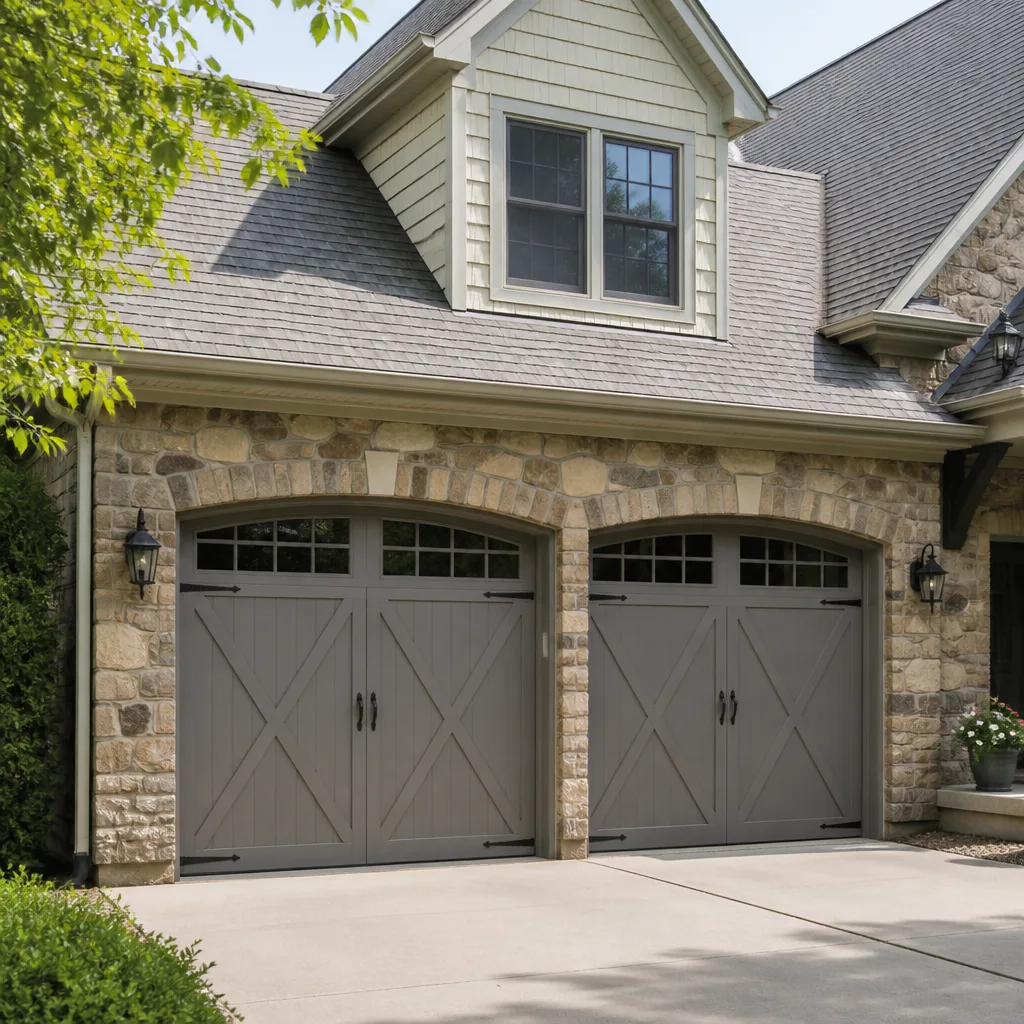 Carriage house
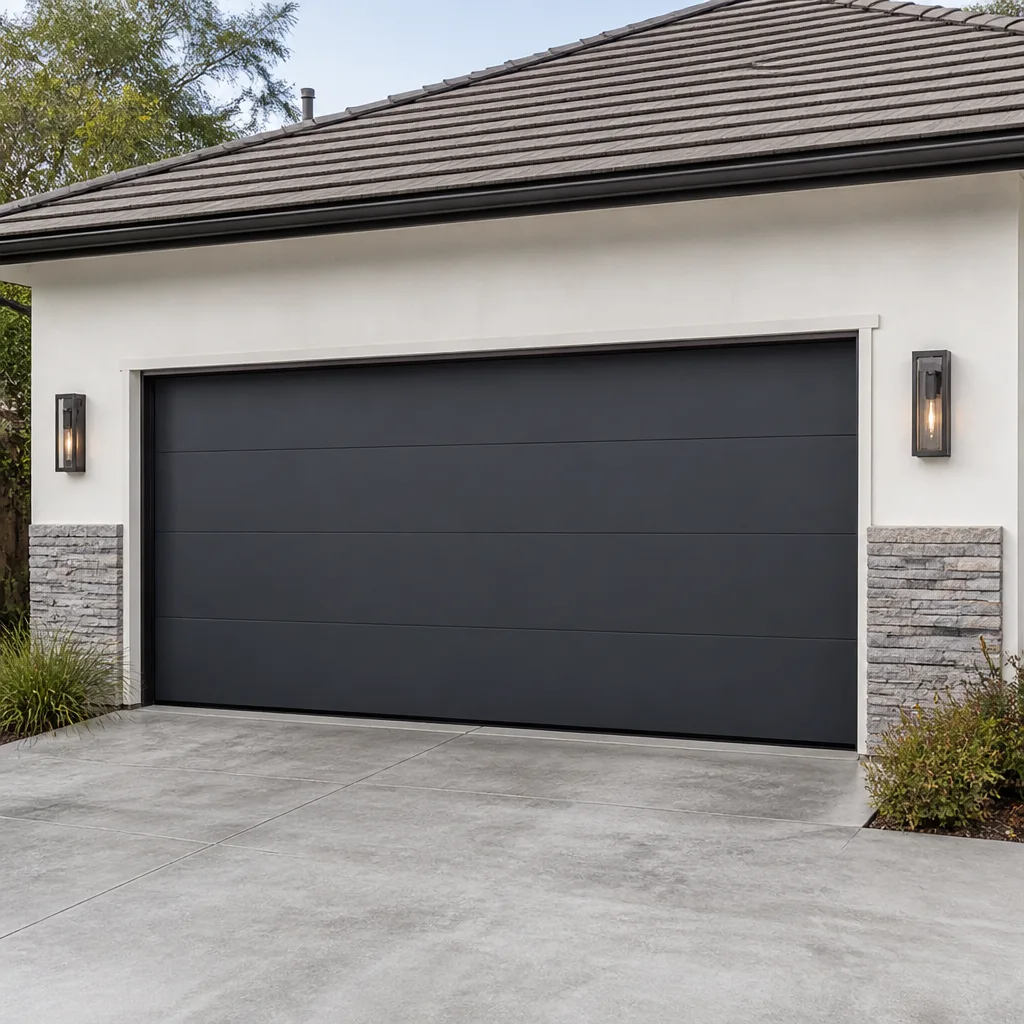 Modern flush
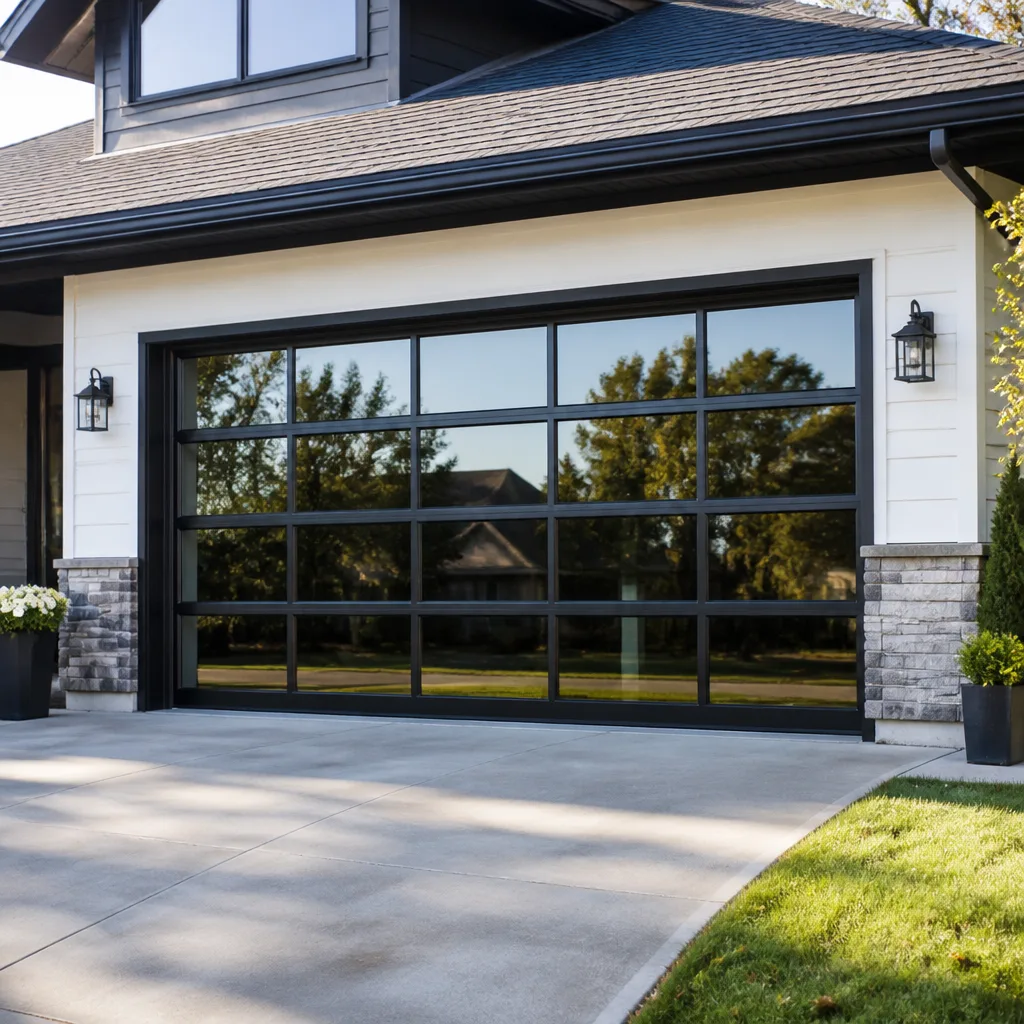 Full-view glass
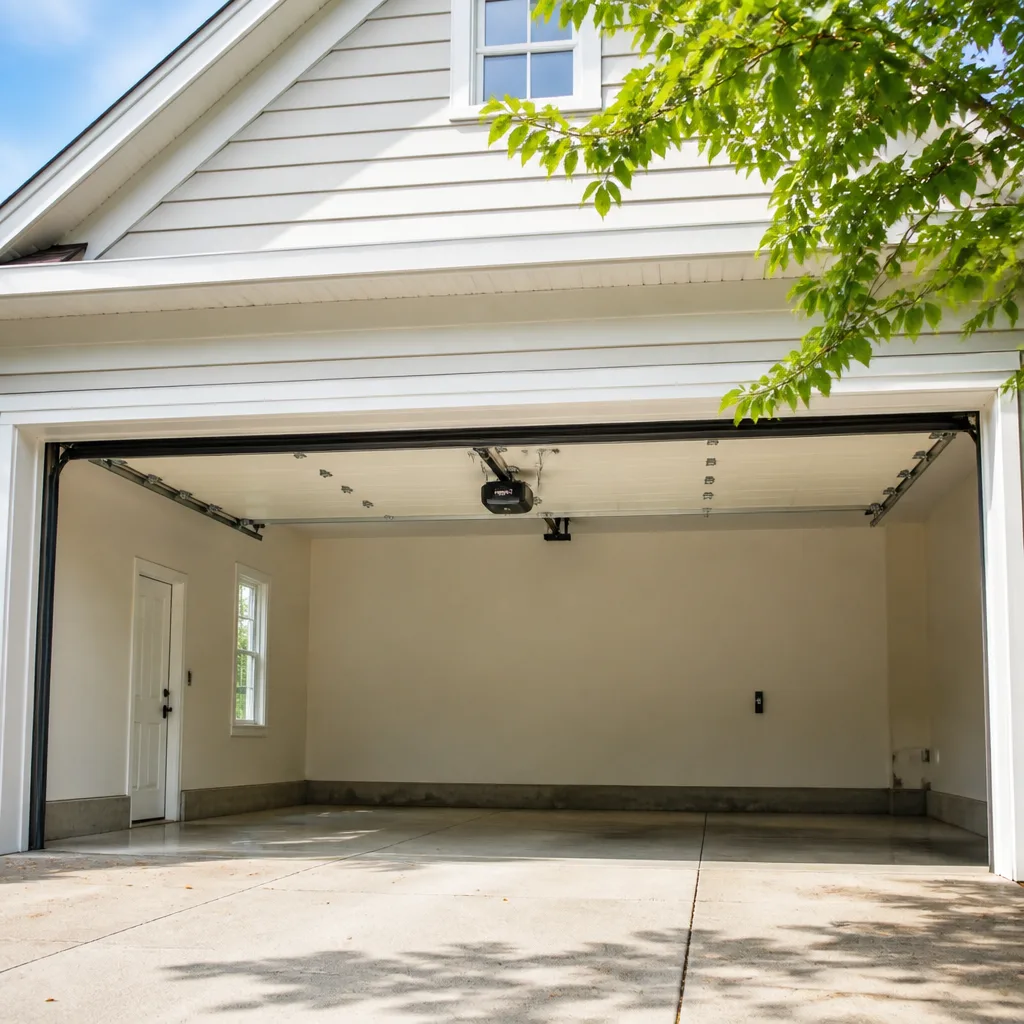 LiftMaster openers
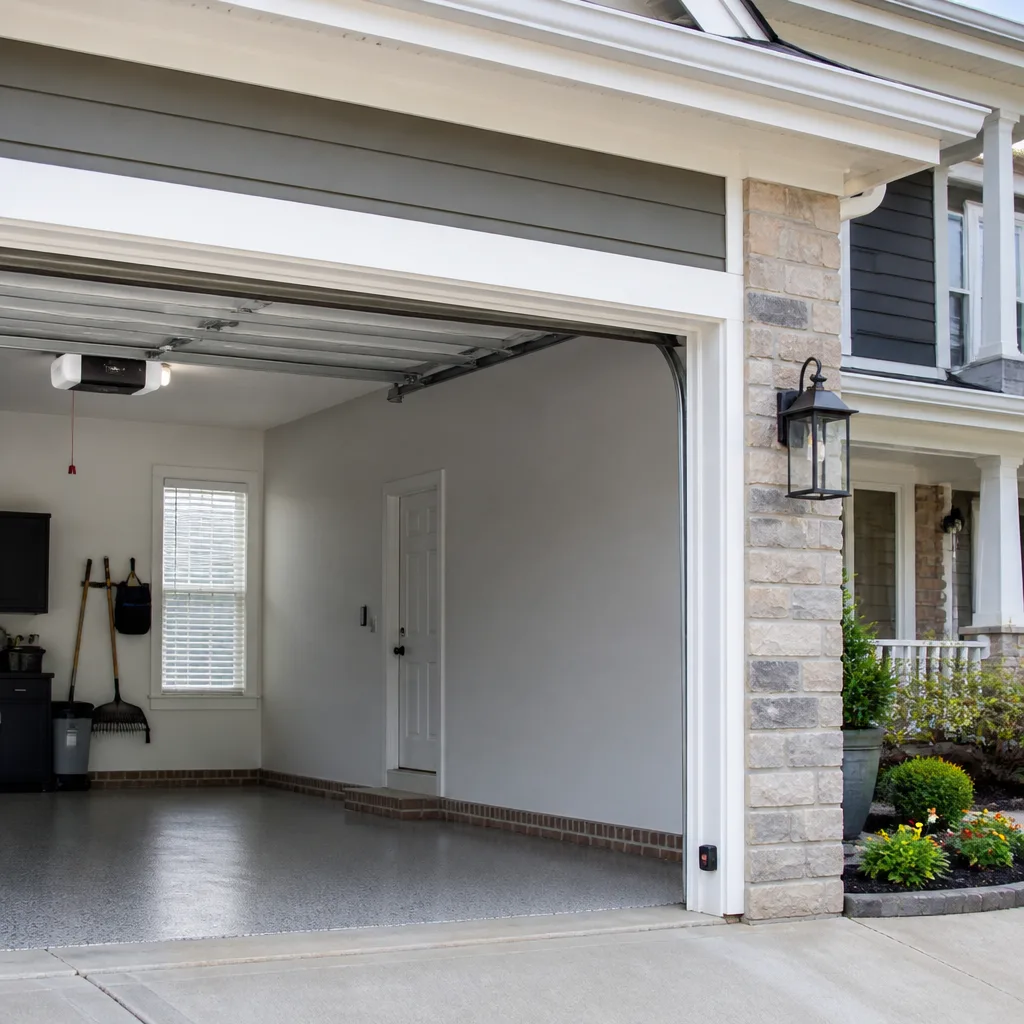 Chamberlain openers
Full 25-point door and opener safety check with every visit - springs, cables, rollers, tracks, and your LiftMaster or Chamberlain opener included
You get a price before we start. It does not change when the pro arrives.
Get your free estimateSeasonal Garage Door Care for Daytona Beach: Year-Round Homeowner’s Guide
Lubricating your garage door in August in Daytona Beach is almost pointless. The humidity burns through most lubricants in weeks. The same job done in November lasts six months. Timing your maintenance to Florida’s actual climate patterns doubles the value of every hour you spend on it.
We don’t have four seasons here. We have hurricane season, storm recovery, dry season, and tourist traffic. Each phase puts a different kind of stress on your door, your springs, and your opener, and the care that matters shifts completely between them. This guide walks through each phase of the year, what to check, when to check it, and when it’s worth calling someone. If you’d rather jump straight to the work, garage door repair covers the hands-on side.
Quick Answer
Garage door care in Daytona Beach should follow the local climate calendar, not the traditional spring-cleaning one. Do your lubrication and spring inspections in the dry season from November through March, run a hardware and emergency-release check before hurricane season in April and May, and inspect the full system after any named storm. Summer is for monitoring and light checks only, because heat and humidity undo fresh lubricant within weeks.
Styles & brands we work with
- Raised-panel steel
- Carriage house
- Modern flush
- Full-view glass
- LiftMaster openers
- Chamberlain openers
Table of Contents
- Why the Maintenance Calendar Here Looks Different
- Pre-Hurricane Season Checklist: April and May
- Post-Storm Inspection Protocol
- Dry Season: Your Best Window for Real Work
- How Summer Heat Affects Springs and Openers
- Tourist Season and High-Cycle Periods
- A Month-by-Month Look at the Whole Year
- Common Mistakes to Avoid
- When to Call a Professional
Why the Maintenance Calendar Here Looks Different
The standard garage door advice you find online was written for places with a real winter. It assumes a cold season that hardens grease, a spring thaw that loosens hardware, and a summer that’s dry enough for lubricant to hold. Daytona Beach doesn’t follow that script. Our winters are mild, our summers are long and humid, and our biggest seasonal threat arrives between June and November rather than December and March.
That means the maintenance calendar most homeowners inherit is roughly backward for this area. The work that benefits most from cool, dry conditions – lubrication, spring adjustment, cosmetic repair – should land in the dry season from November through March, not in spring. The work that protects the door from wind and storm damage should happen before hurricane season, which means April and May, not fall.
There’s a second local wrinkle: use patterns. A door in Daytona Beach that sits mostly idle for part of the year can suddenly cycle dozens of times a day during major events and spring break. That swing in use matters as much as the weather, and it’s something a general maintenance calendar never accounts for.
In our experience, homeowners who shift their routine to the local rhythm get noticeably more life out of springs, rollers, and openers than those who stick to the generic schedule. Our technicians have up to 9 years of experience working on this exact climate, across every major brand and every failure point.
Key Takeaways
- Lubricate in the dry season (November to March), not in summer.
- Check hardware, bracing, and the emergency release before hurricane season (April and May).
- Inspect the full system after any named storm, and after severe thunderstorms.
- Summer is for monitoring heat-related spring and opener issues, not heavy maintenance.
- Prep for elevated door cycles during the Daytona 500 and spring break.
Pre-Hurricane Season Checklist: April and May
The single most useful thing you can do for your garage door in Daytona Beach happens in the weeks before hurricane season ramps up. This is when you confirm the door is physically sound, the hardware is tight, and the safety features work. Do this in April or May, before the first serious system forms.
Run through these steps in order:
- Torque and tighten the hardware. Check every hinge, bracket, and bolt on the door and track. Vibration from daily use loosens fasteners over the year, and a storm puts load on anything already loose.
- Inspect the wind bracing and reinforcement. If your door has horizontal or vertical reinforcement struts, confirm they’re straight and firmly attached. A bent or missing strut undermines the door’s ability to resist wind pressure.
- Test the emergency release. Pull the release handle to confirm the door disconnects from the opener and moves freely by hand. Re-engage it afterward. If it’s stiff or doesn’t release, that’s a repair, not a quirk.
- Check the door balance. Disconnect the opener and lift the door halfway by hand. It should stay roughly in place. A door that drops or rises on its own has a spring or balance problem that won’t improve in a storm.
- Look at the weather seal and bottom seal. Worn seals let wind-driven rain in, which is more of a problem during a tropical system than in a normal afternoon shower.
- Confirm the opener’s safety reversal. Place an object in the door’s path and confirm the door reverses on contact. This matters year-round, but it’s worth verifying before the busy season.
What “Hurricane-Rated” Actually Requires to Stay Valid
A hurricane-rated label on a door only means something if the door, its reinforcement, and its installation are all still intact. Ratings are tied to a specific configuration – the door panels, the bracing, the track, and the anchors – and any change can void that rating. Adding or removing reinforcement, replacing panels with a different model, or reinstalling the track can quietly take a rated door out of spec.
The practical rule: if you’re unsure whether your door’s reinforcement is still correct for its rating, ask. Replacement hardware that isn’t matched to the door, or a door that’s been modified, can look fine while no longer meeting what its label claims. When in doubt, a professional inspection settles it. If your door has visible damage or the opener has stopped responding, garage door opener repair or a full repair visit is the right move.
Post-Storm Inspection Protocol
After a storm passes, the inspection you do depends on the storm’s intensity. A named storm or hurricane warrants a full walkthrough. A standard summer thunderstorm usually warrants a quick visual check. Knowing which one you’re doing keeps you from either overdoing it or missing something that matters.
After a Named Storm
- Visual scan from outside first. Look for bent panels, a door that’s jumped its track, or a sagging top section. Don’t force a door that’s clearly off-track.
- Check the track for displacement. Storm pressure and debris can knock tracks out of alignment. A visibly bent track means stopping and calling for repair.
- Test the opener only if the door looks aligned. If the door moves normally, run it once and watch the full travel. Stop immediately if it binds or reverses unexpectedly.
- Inspect springs and cables for anything obvious. Look for a clear break in a spring or a cable off its drum. Don’t touch either – a broken torsion spring and its cable hold dangerous tension.
- Check for water intrusion. Pooling under the door or wetness inside points to a failed bottom seal, which should be replaced before the next system.
After a Standard Afternoon Thunderstorm
A quick check is usually enough. Confirm the door still opens and closes smoothly, glance at the track and hardware, and clear any debris that blew against the door. If everything runs normally, you’re done. The full protocol matters most when a system actually pushed wind and rain against the door.
If anything seems off after a storm, don’t cycle the door repeatedly to “test” it. That can turn a small alignment issue into a larger repair. Springs and cables carry enough energy to cause serious injury, so leave those to a trained professional.
Dry Season: Your Best Window for Real Work
Between November and March, Daytona Beach gets the conditions that garage door maintenance actually needs: cooler temperatures and lower humidity. This is the window when lubrication holds, metal parts settle, and work done now lasts. If you do one round of real maintenance a year, put it here.
- Lubrication that lasts. A quality lubricant applied to rollers, hinges, tracks, and the spring coil in the dry season can last months. The same product applied in August can break down in weeks under high humidity.
- Spring adjustment. Torsion spring tension is easiest to set and verify in stable, cooler temperatures. If your door feels heavy or unbalanced, this is the season to have it checked. When springs are actually broken or worn out, see garage door spring repair.
- Cosmetic repairs. Touch-up paint, panel repairs, and seal replacement all adhere and cure better in lower humidity. Dry-season work also means the repair isn’t fighting rain and heat the same week it’s done.
- Seal replacement. Replacing a worn weather seal in the dry season gives it a clean stretch to settle before the wet months return.
There’s a practical angle too: the dry season is when you’re most likely to notice small problems before summer traffic and storms amplify them. A slightly noisy roller or a door that closes a touch unevenly is easy to fix in January and annoying in July. In Daytona Beach, the winter months are the patient season for garage door work. Use them.
One caveat on spring work: never adjust a torsion spring yourself. The tension stored in these springs can release suddenly and cause serious injury, even if the door seems balanced. A trained technician has the tools and the procedure to handle it safely. This is also where brand knowledge helps – a Raynor or LiftMaster system may call for a specific spring or hardware configuration, and the right part prevents a repeat visit.
How Summer Heat Affects Springs and Openers
Summer is the stress-test season for your garage, and two components take the brunt of it: torsion springs and the opener motor. Understanding what heat does to each one helps you spot trouble early and know when to stop using the door until it’s checked.
Torsion Spring Tension in the Heat
Metal expands and loses rigidity as temperatures climb, and a torsion spring under load doesn’t behave the same in July as it does in January. The effect is that springs can feel weaker or the door can sag or drift when it shouldn’t. Tension changes also show up as a door that opens partway and stops, or one that feels unusually heavy at the bottom. Don’t try to compensate by tightening anything yourself. If the door’s balance feels wrong in hot weather, have it inspected.
Opener Motor Performance
Hot, humid air is harder on opener electronics and motors. Common summer symptoms include a motor that runs but doesn’t lift the door fully, a unit that hums or clicks instead of moving, or a remote that becomes intermittent. Most openers we work on are from LiftMaster, Chamberlain, or Genie, and the brand often tells us where to look first. If your opener is straining, it can usually be repaired without replacing the whole unit.
What to Do in Summer
- Watch for changes in door speed or smoothness, especially in the hottest weeks.
- Listen for new noises: grinding, popping, or a strained motor.
- Lightly test balance by hand with the opener disconnected – but never adjust springs.
- Wait for the dry season for any full lubrication or adjustment job.
- Call for a check if the door reverses unexpectedly or stops mid-travel.
Tourist Season and High-Cycle Periods
Daytona Beach has a second, quieter form of wear: use spikes. During spring break and the Daytona 500, the area’s traffic jumps, and so does the daily cycle count on many garage doors. Doors that sit mostly idle for months suddenly open and close dozens of times a day, and that’s a different kind of stress than steady, year-round use.
Our technicians see the pattern every year. A door that’s been quietly working for months starts acting up right when the household is busiest. The wear parts – rollers, hinges, and the spring – take the extra cycles, and an opener that’s been fine can start to show its limits. These spikes are predictable, so it pays to prep for them.
- Check the door ahead of the busy period. A quick balance test and a listen for new noises can catch a failing roller or a straining opener before it becomes a problem.
- Clear the track and hinges. Debris and dryness in the moving parts turn extra cycles into extra wear.
- Watch the opener’s workload. An older opener that’s suddenly working harder is the first thing to fail.
- Keep the safety sensors clean and aligned so the door doesn’t stop or reverse in the middle of a busy day.
The right time to prepare for a high-cycle period is a couple weeks before it hits, not the morning it starts. If your door is already showing problems and you need a fix quickly, our technicians carry a full range of parts for the brands we service, so a busy stretch doesn’t have to become a shutdown.
A Month-by-Month Look at the Whole Year
Here’s how the calendar breaks down for a Daytona Beach home, condensed into the four phases that matter.
- Dry season (November through March). This is your main maintenance window. Lubricate, get spring tension checked, replace seals, and handle cosmetic repairs. Cooler, drier air means the work holds.
- Pre-hurricane (April and May). Tighten hardware, inspect wind bracing, test the emergency release, and confirm the door’s balance. Fix anything weak before the first serious system.
- Hurricane season and summer (June through November). Monitor. Watch for heat-related spring tension changes and opener strain. Do light checks only and call for anything that looks wrong. Lubrication here won’t last.
- Storm recovery (after any named storm). Full inspection: panels, track, springs, cables, seals, and opener. Don’t force a door that’s off-track.
If you only remember one thing from this guide, make it the sequence: dry-season maintenance, pre-season storm checks, summer monitoring, post-storm inspection. That rhythm matches how Daytona Beach weather actually behaves, and it keeps small issues from becoming expensive ones.
Common Mistakes to Avoid
- Lubricating in the middle of summer. High humidity breaks down most lubricants fast, so a July lubrication job often wears away within weeks. Do it in the dry season for lasting protection.
- Ignoring wind bracing until a storm is forecast. Reinforcement that’s missing, bent, or loose won’t strengthen the door when it counts. Check it in April, not when a system is already forming.
- Adjusting torsion springs yourself. These springs hold dangerous tension and can release suddenly. This is one of the few garage door jobs that belongs to a trained technician, every time.
- Assuming “hurricane-rated” means it’s still valid. A rating depends on the door’s current configuration. Modified hardware or replaced panels can quietly take a rated door out of spec.
- Cycling a damaged door to “test” it. Repeatedly running a door that’s off-track or has a broken spring can turn a simple repair into a bigger one.
- Skipping the post-storm check. A storm can leave small misalignments and seal damage that only show up as water intrusion or a door that starts binding later.
- Putting off high-cycle prep. A door that’s about to run dozens of extra cycles a day should be checked before spring break or the Daytona 500, not after.
When to Call a Professional
Some seasonal checks are yours to run: tightening visible bolts, testing the emergency release, clearing debris, and watching for changes in door behavior. Others are clearly professional work. Call when a spring is visibly broken, the door has jumped its track, the opener hums but won’t move, the door reverses on its own, or anything about a storm-damaged door looks warped or misaligned. Call before a high-cycle period if the door is already noisy or unbalanced, and call before hurricane season if the wind bracing or door balance seems wrong.
At Daytona Beach Garage Door Repair Pros, we offer free estimates in Daytona Beach – call (866) 937-7159. We answer 24/7. Fast dispatch from 7am to 7pm, Sunday through Friday. We work on the brand you already have, and the price is quoted and agreed before any work starts.
See the difference
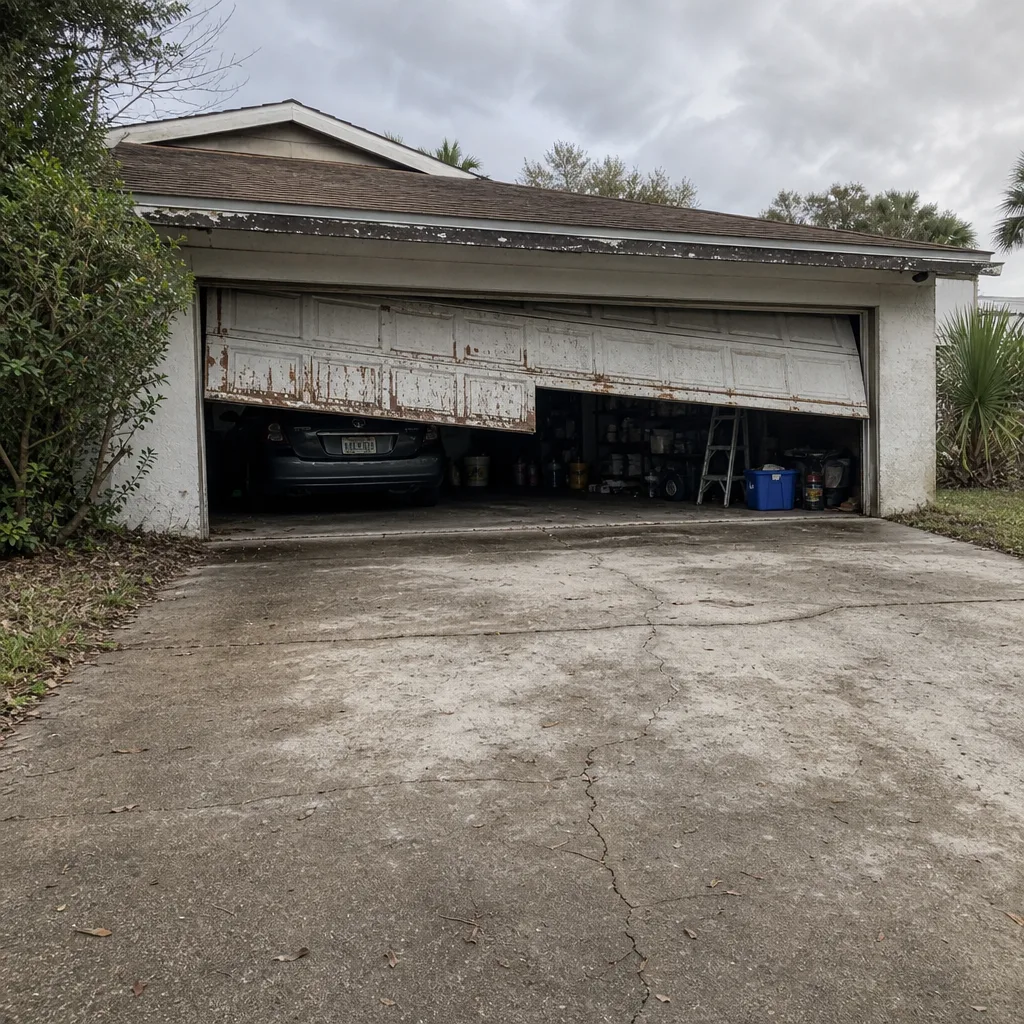 Before
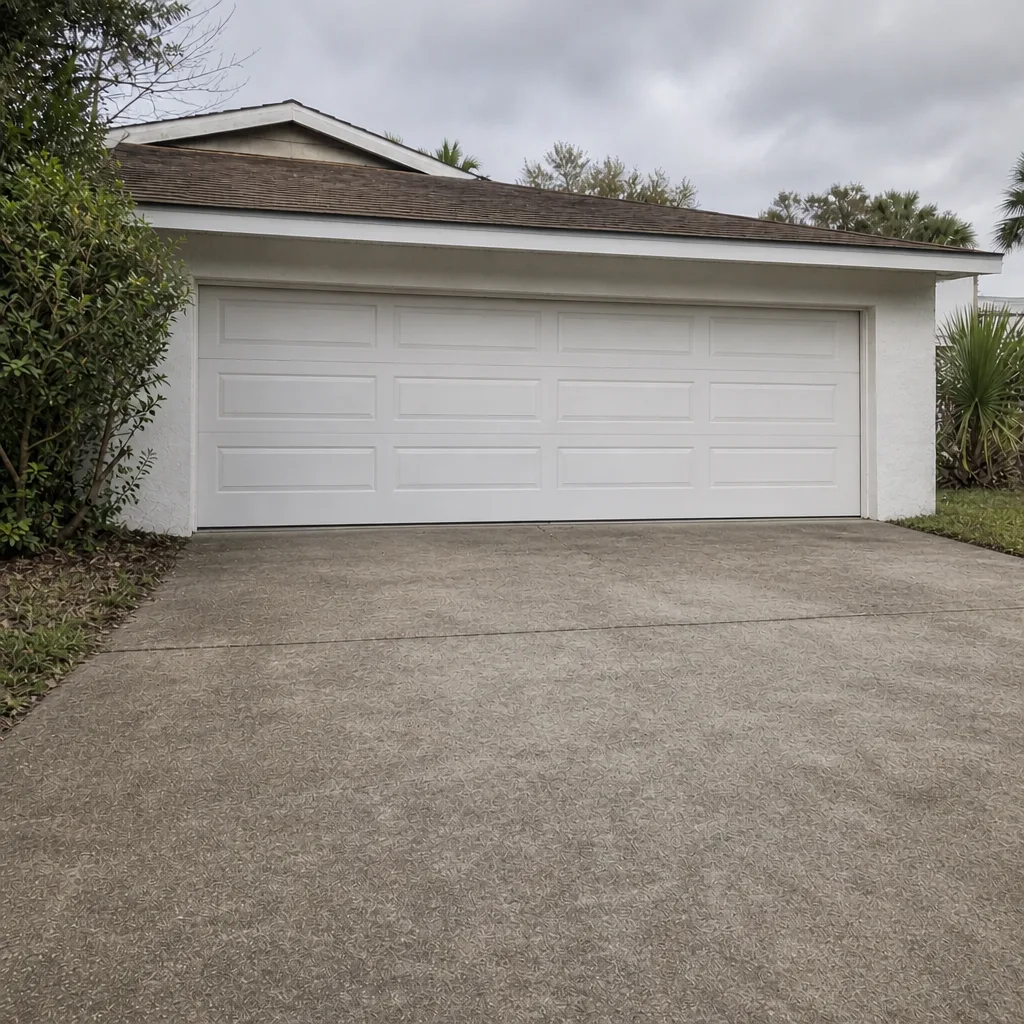 After
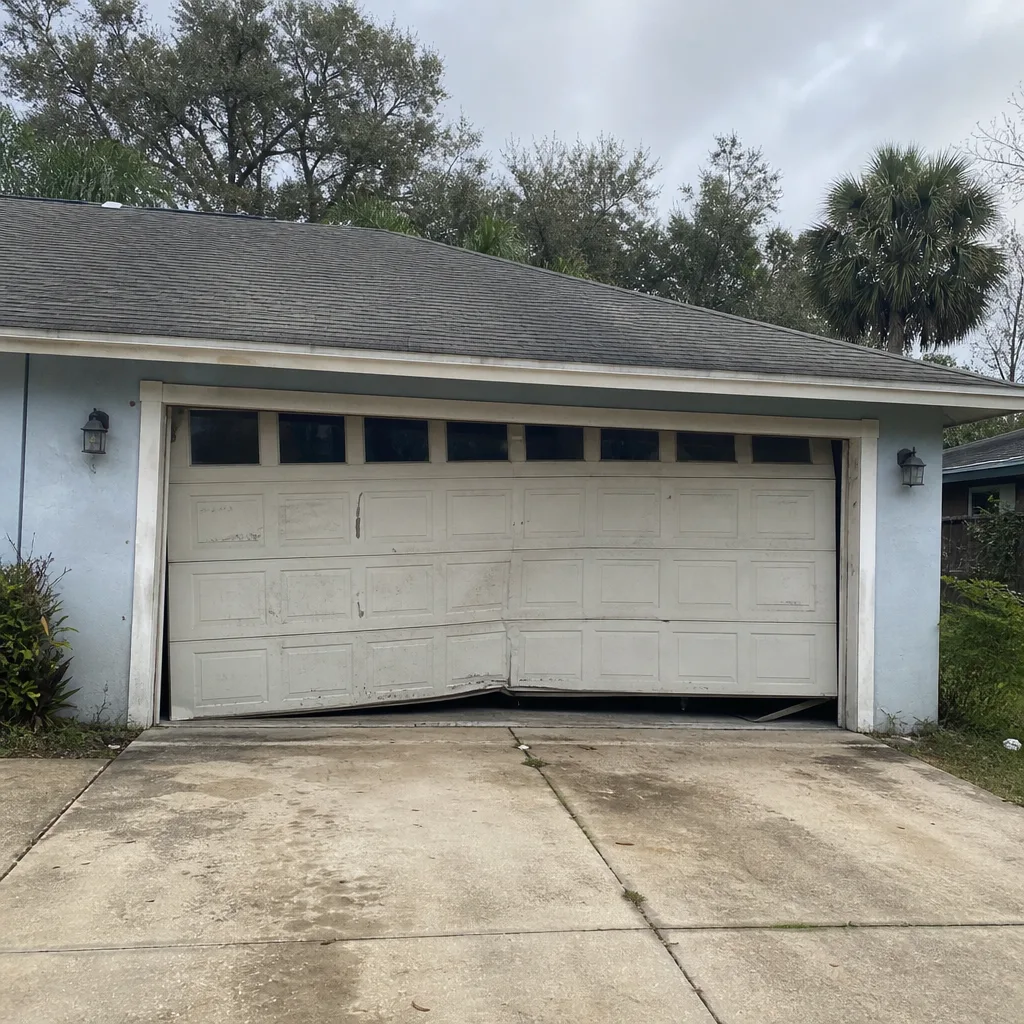 Before
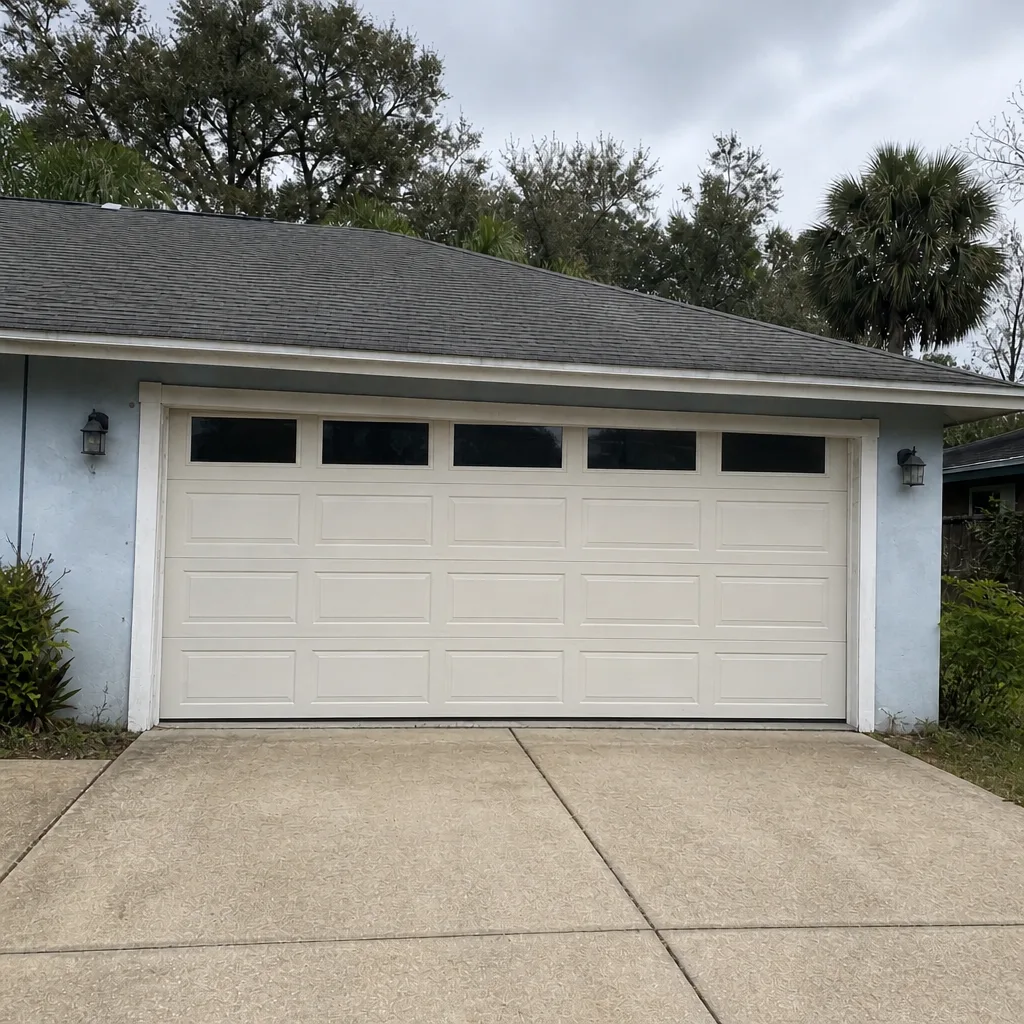 After
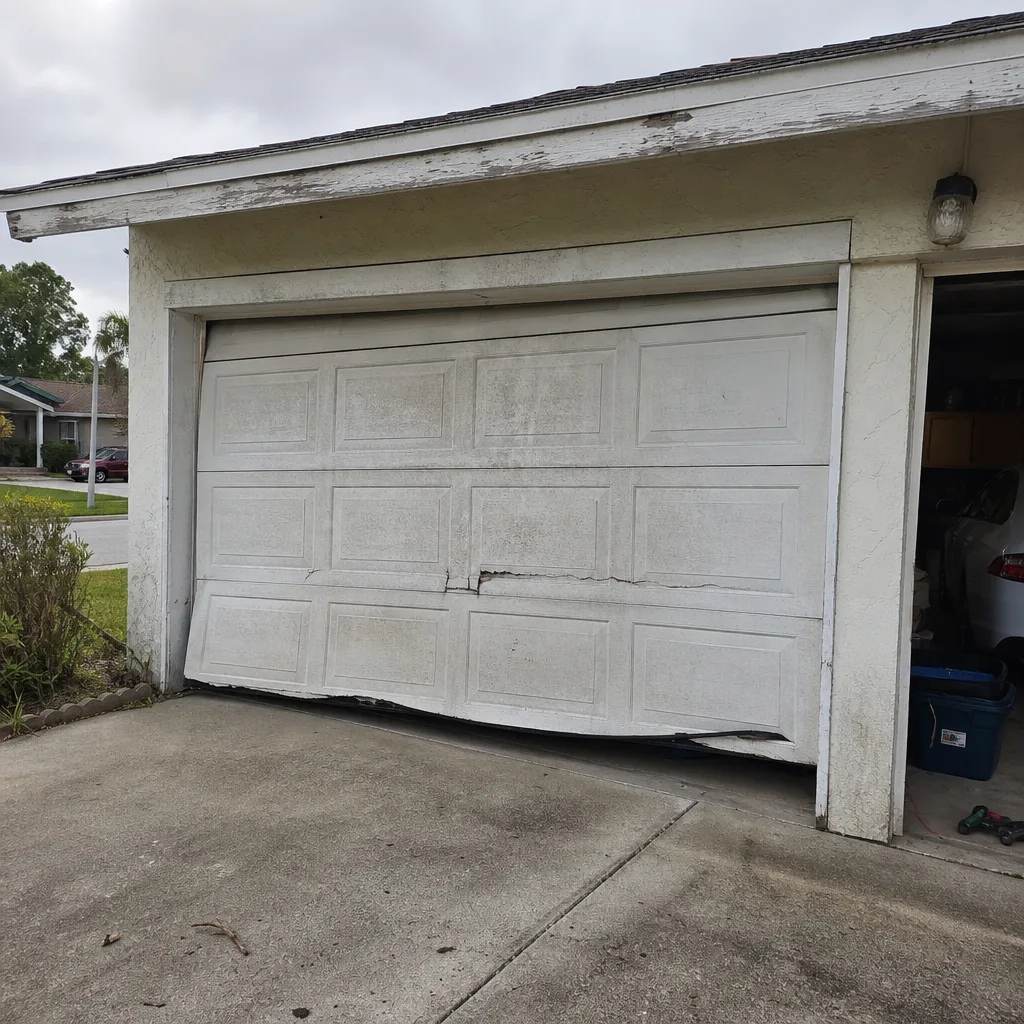 Before
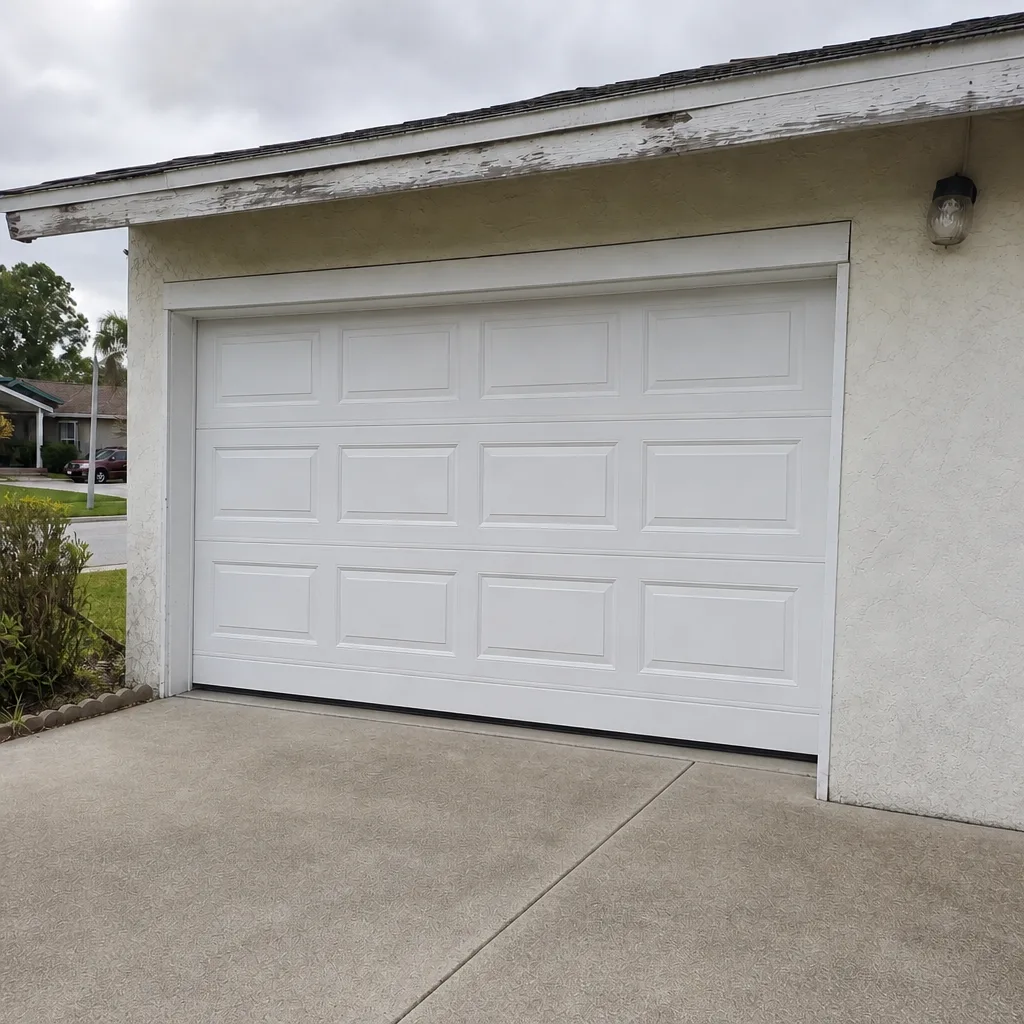 After
Frequently Asked Questions
The best time for full service in Daytona Beach is the dry season, from November through March. Lubrication, spring adjustment, seal replacement, and cosmetic work all hold up better in the cooler, drier air, and the work has a full season of milder weather before summer heat and hurricane season arrive.
Usually not, because summer humidity breaks down most lubricants within weeks. Save your lubrication work for the dry season so it lasts. A professional can also recommend the right lubricant for the moving parts, which stretches the value of a single application.
Torsion spring tension changes with temperature, and hot weather can make a door feel heavy or stop mid-travel. Don’t adjust the springs yourself. Have the door’s balance checked, since heat-related changes can signal a spring that’s near the end of its life.
Check the door panels, track, springs, cables, seals, and opener, starting with a visual scan from outside. Don’t force a door that’s off-track or attempt to touch a broken spring or cable. If anything looks wrong, stop using the door and call for an inspection.
You can handle the simple parts: clear the track, check the safety sensors, and listen for new noises. But a door that runs dozens of extra cycles should have its balance and opener checked before the busy stretch, not after, and that’s professional work.
Only if the door, its reinforcement, and its installation still match the original rated configuration. Adding or removing hardware, or replacing panels with a different model, can take a rated door out of spec. If you’re unsure, have it inspected before storm season.
The Bottom Line
Garage door care in Daytona Beach is about timing, not busywork. Do the real maintenance in the dry season from November through March, run the storm checklist in April and May, monitor for heat-related issues over the summer, and inspect the full system after any named storm. Prep for the high-cycle stretches around spring break and the Daytona 500 a couple weeks ahead, not the day they start. Springs and cables carry too much energy to handle yourself, so leave those to a technician. Our technicians have up to 9 years of experience with this climate and with the brands you likely already own, including LiftMaster, Chamberlain, and Genie. One call covers the whole system – door, springs, and opener – so you’re not handed off mid-repair.
If your door needs an inspection, a repair, or a full replacement, we can help. Whether you’re starting with a seasonal check or moving toward a new install, the work runs through our full-service Daytona Beach Garage Door Repair Pros team. Call (866) 937-7159 for a free estimate. We answer 24/7. Fast dispatch from 7am to 7pm, Sunday through Friday. The price is quoted and agreed before any work starts.
Written by the team at Daytona Beach Garage Door Repair Pros.